make preferable

The Yerevan State Medical University (YSMU) studied the West Nile virus as far back as 40 years ago (1985-1999), YSMU Rector Armen Muradyan wrote on Facebook.
“What is West Nile fever?
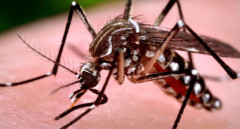
West Nile fever is classified as an arbovirus. It was first discovered in the West Nile, from where it got its name. Arboviruses are transmitted by living transmitters—mainly ticks and mosquitoes. There are more than 500 species of arboviruses, of which more than 100 are pathogenic for humans.
The Department of Epidemiology of the [Yerevan State] Medical University conducted scientific researches in Armenia in 1985-1999. They include epidemiological, entomological, entomological, virological, and serological researches.
‘Every year, in the fall and spring (during the peak of the disease), we visited the 10 RA [(Republic of Armenia)] provinces with our entomologist; we collected mosquitoes and ticks from 118 settlements, the results of which were kept. Then a virological research was performed on newborn—1-2 day old—mice; it is these mice that are very sensitive to arboviruses,’ notes Hasmik Hovhannisyan, professor of the Department of Epidemiology.
What is characteristic of arboviruses?
In the world, the transmission of arboviruses occurs mainly through birds and rodents. Migratory birds become infected with the virus, a tick or mosquito, biting them, becomes infected and can then transmit it to the human population.
Arboviruses have a pronounced seasonality.
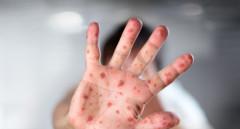
There are pathogens that can be very mild with flu-like symptoms, but severe forms are also possible.
‘Different arbovirus pathogens have been isolated in 8 of 10 provinces of Armenia. We have the greatest spread in Aragatsotn, Armavir, Ararat Provinces, where mosquitoes were the transmitters, whereas ticks—in Kotayk Province. We did not find pathogens in Lori and Shirak [Provinces].
For the first time in Armenia, we isolated 22 strains of West Nile fever from mosquitoes and only 4 strains from ticks. That's why we focus mainly on mosquitoes,’ emphasizes Hasmik Hovhannisyan.
In her words, the natural foci of transmissive transmission of the virus can survive for a long time and not cause concern. But the situation is different in recent times due to climate changes, temperature increase, and a large flow of migratory birds.
According to WHO [i.e. World Health Organization] data, this disease is mostly asymptomatic, but it can cause severe complications, even cases of death. The West Nile fever can be found on the WHO list of specially dangerous infections.
The infection is transmitted to a person from living transmitters—ticks, mosquitoes—, the infection is not transmitted from person to person. But, of course, it is necessary to keep vigilance high and use research data.
As of now, there is neither a specific treatment nor a vaccine [for the West Nile fever]," wrote the rector of YSMU.