make preferable
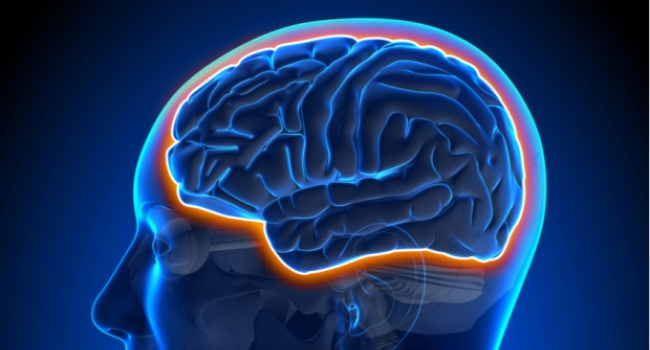
A new study published in the journal Nature Neuroscience suggests that accurately modeling brain function requires accounting not only for cooperation between neural networks, but also for their competition—a factor long overlooked.
An international team of scientists from the University of Oxford, the University of Cambridge, McGill University, Aarhus University, and Pompeu Fabra University set out to understand how the brain balances these two modes. In everyday life, this is constantly evident: a person cannot do everything at once because different brain systems compete for limited resources.
According to the study’s first author, Andrea Luppi, most models developed over recent decades assumed that brain regions only amplify each other’s activity. This led to excessive synchronization—a state rarely observed in real human or animal brains.
To test an alternative approach, the researchers created computer models of the brain for three species: humans, macaques, and mice. They compared a traditional cooperation-based model with a new one in which neural networks can both activate and suppress each other, effectively competing.
The results were striking: in all three cases, models incorporating competitive interactions performed more accurately and realistically. Competition plays a crucial stabilizing role—it prevents excessive excitation and allows different brain systems to take turns in driving activity.
Importantly, these models also better captured individual brain characteristics—the so-called “neural fingerprint.” This has direct implications for the development of “digital twins”—virtual replicas of the brain that can be used to test treatments before applying them to patients.
The authors emphasize that if models fail to reflect the fundamental organizational principles of a specific brain, their predictions may be inaccurate or even misleading. Incorporating competition between neural networks opens new possibilities not only for neuroscience and personalized medicine, but also for the development of more advanced artificial intelligence systems.