make preferable
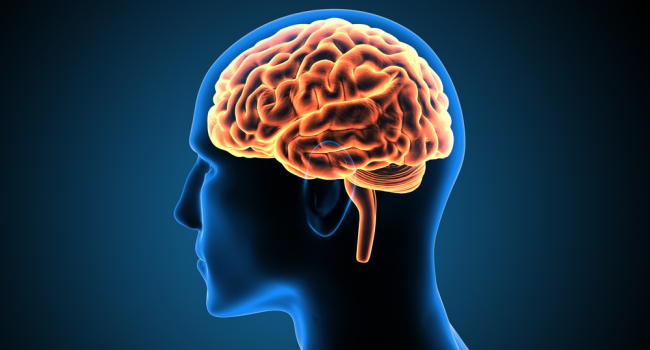
The human brain begins as a single cell that eventually develops into one of the most complex structures in nature, containing approximately 170 billion cells. Exactly how those cells organize themselves into precise neural circuits has remained one of developmental neuroscience's greatest mysteries.
Researchers at Cold Spring Harbor Laboratory now propose that the answer may lie in a surprisingly simple biological principle. Their study suggests that brain cells keep track of their position by remaining close to their cellular relatives, helping the brain organize itself as it grows. The discovery could reshape our understanding of brain development and may even influence future research in artificial intelligence.
Cells Must Know Where They Are
Stan Kerstjens, a postdoctoral researcher in the laboratory of Professor Anthony Zador, explains that every developing brain cell faces two fundamental questions: where it is located and what type of cell it should become.
A cell can only detect itself and its immediate neighbors, yet its future depends entirely on its position within the developing brain. If a cell ends up in the wrong place, it may develop into the wrong type, disrupting normal brain formation.
In their study, published in Neuron, researchers from Cold Spring Harbor Laboratory, Harvard University, and ETH Zürich propose a new model explaining how billions of cells solve this challenge simultaneously.
More Than Chemical Signals
For decades, scientists have believed that cells determine their position mainly through chemical signals exchanged with neighboring cells. While this mechanism works well in relatively small tissues, it becomes much harder to explain in a rapidly growing brain containing billions of neurons.
Because chemical signals weaken over distance, researchers have long questioned how cells located far from one another can accurately determine their positions.
The new study suggests that cells may instead rely partly on their lineage—the sequence of cell divisions connecting them to their common ancestor.
The researchers compare the process to the way human populations gradually spread across a country. Over generations, descendants usually settle close to their parents, creating recognizable geographic patterns without requiring long-distance communication. The team believes developing brain cells follow a similar rule, with descendants remaining close together as the brain expands.
Testing the Theory
To examine this idea, the scientists developed what they call a lineage-based model of scalable positional information.
They first tested the concept mathematically before analyzing patterns of gene activity in developing mouse brains at both the single-cell and tissue levels.
The researchers then examined zebrafish brains and observed similar organizational patterns, suggesting that the same developmental principle may operate across vertebrate species regardless of brain size.
Their findings indicate that cellular lineage and chemical signaling likely work together to guide brain development.
Implications Beyond the Brain
Although the study focused on brain development, the researchers believe the same principle could apply to many other growing tissues, including tumors.
The work may also have implications for future generations of artificial intelligence. AI systems capable of reproducing or evolving over time might one day organize information using mechanisms similar to the way biological cells inherit positional information across generations.
Ultimately, the findings may help scientists better understand one of biology's most fundamental questions: how intelligence emerges from a single fertilized cell.
According to Kerstjens, uncovering how the brain acquires its remarkable complexity throughout both development and evolution represents one important piece of the much larger puzzle of human intelligence.