make preferable
Scientists at Don State Technical University (DSTU) have developed a material designed to protect and restore brain cells after traumatic brain injuries using collagen extracted from jellyfish. Unlike collagen derived from animals, jellyfish collagen has a more rigid structure and contains fewer bacterial by-products, making it a promising raw material for medical applications. The findings were published in the International Journal of Molecular Sciences.
After a traumatic brain injury, brain cells are exposed to inflammation and oxidative stress, which can lead to cell death, scientists from Don State Technical University told RIA Novosti.
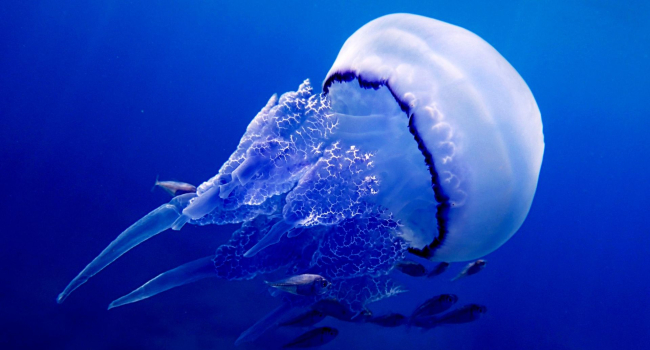
Researchers at DSTU developed a method for extracting collagen from barrel jellyfish (Rhizostoma pulmo) found in the Sea of Azov. After studying the properties of the resulting material, the scientists proposed using it in the treatment of traumatic brain injuries.
“We took jellyfish and learned how to extract high-quality collagen from them—a natural ‘structural protein’ that forms the basis of the extracellular matrix of tissues. Using it, we created a soft, porous matrix resembling a thin sponge and impregnated it with sodium thiosulfate (Na₂S₂O₃). We then implanted this matrix into the damaged area following a severe traumatic brain injury and observed a pronounced protective effect: pathological processes in the damaged nervous tissue were significantly reduced,” said the head of the laboratory.
The scientist explained that the sulfur-containing compound (Na₂S₂O₃) enables the gradual release of hydrogen sulfide (H₂S), a gas molecule naturally produced in nervous tissue that has significant protective properties. However, following a traumatic brain injury, H₂S levels drop sharply, triggering a range of pathological processes.
The new hybrid treatment is designed to address this problem: the collagen matrix supports the structure of the damaged tissue, while the gradual release of H₂S helps preserve the viability of nerve cells and reduce the severity of pathological changes.
“In addition, we are turning the environmental problem of excessive proliferation of barrel jellyfish in the Sea of Azov into a source of a modern biomedical material with high added value. ‘Marine’ collagen has an advantage over animal-derived protein in terms of purity—it contains fewer bacteria and fewer by-products of their activity,” Rodkin added.
According to the scientist, the DSTU research team has demonstrated that collagen derived from jellyfish from the Sea of Azov is safe for nervous tissue cells and can be used to create various forms, from soft hydrogels to porous structures. The material can also be produced consistently and with a high degree of purity, making it a promising basis for developing treatments for traumatic brain injuries.
Moving toward clinical use of collagen derived from barrel jellyfish will require additional research, but the scientific and technological foundation for such applications has already been established.