make preferable
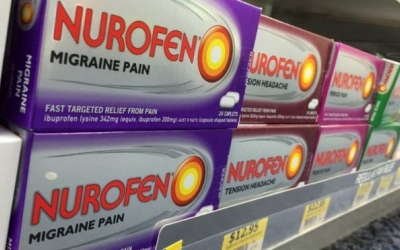
Shoppers were today advised against buying expensive painkillers after it emerged big brands such as Nurofen charge a huge mark-up for the same drug.
While the same drug - ibuprofen - can cost as little as 20p a packet when sold as an own brand, the cost can be at least 10 times this when sold under a popular brand name.
Nurofen has also come under fire in the last 24 hours for charging almost double for its specialist pain relief products - which contain the same ingredients as its standard painkiller.
Critics say drugs firm Reckitt Benckiser charges more for interchangeable products, despite the medications containing identical dose of ibupfrofen.
Its Nurofen Express Period Pain typically costs £3.79 despite it containing no more pain relief than its £2 packets of standard painkiller.
The targeted range each contain 342mg of fast-acting ibuprofen lysine - which is equivalent to 200mg ordinary ibuprofen found in its standard tablets - but is said to work faster.
Research has shown that shoppers are spending a staggering £2.5 billion a year on expensive branded pills and lotions when cheaper, generic versions are just as effective.
One of the biggest money-spinners is Britain’s £350 million market in ‘targeted’ painkillers, which claim to treat specific areas of the body, such as the Nurofen brand.
Today, Richard Headland, editor of the consumer watchdog Which?, said: 'Our research shows many painkilling medicines have exactly the same active ingredients, despite vastly different marketing, packaging and pricing.
'Our advice to people is to buy cheaper generic medicines wherever possible and, if in doubt, ask a pharmacist.
Reckitt Benckiser said today the price hike was down to the products being formulated differently, with some designed for slow release while others, like headache tablets, are designed to have a more immediate hit.
'If Nurofen's products have the same active ingredients, the same format and the same formulation, they have the same manufacturer's recommended retail price (MRRP),' it said.
'Nurofen pain-specific products are not the same as standard Nurofen. They are available in different formats and faster acting formulations.'
It follows the ruling by an Australian court to remove certain products from shelves after claims they misled customers because the product contents were identical, despite being marketed to target different types of pain.
The products are still being sold in the UK because of the additional information printed on the back of packets which states it can be taken for different illnesses.
However, the UK's advertising watchdog is investigating 12 complaints in the UK about a television advert for Nurofen Express.
The Advertising Standards Authority (ASA) is examining whether the advert was misleading because it implies the product directly targets muscles in the head.
It is also looking into whether viewers were misled by the claim that the Nurofen Express 'gives you faster headache relief than standard paracetamol or ibuprofen'.
An ASA spokesman said: 'We received the complaints in February and launched an investigation in March. This is a complex case and our investigation is ongoing.
'The advertiser is providing evidence to substantiate its claims, we're carefully assessing that and we'll publish our findings in due course.'
The Australian court ordered the tablets to be taken off the shelves after finding the products marketed to treat specific pains, such as migraine and period pains, were identical to one another - and therefore misled consumers.
It said that British-based multinational had made misleading claims about its Nurofen Back Pain, Nurofen Period Pain, Nurofen Migraine Pain and Nurofen Tension Headache products.
The Australian Competition and Consumer Commission (ACCC) took the company to court in March.
Each product contains 342mg of fast-acting ibuprofen lysine, which is equivalent to 200mg ordinary ibuprofen. It found each product had the same effect on pain.
It comes just months after a study found the market-leading painkiller Nurofen costs on average £2.01 per pack of 16 tablets.
But generic alternatives at Asda and Tesco can be bought for as little as 30p - a difference of 567 per cent.
Both products contain exactly 200mg of ibuprofen and claim to offer the same pain relief.
Nurofen argues the products had been 'designed to help the consumer easily navigate our range', especially in stores where there was no pharmacy.
Manufacturer Reckitt Benckiser, which is based in Slough and also makes Durex condoms, Finish dish-washing tablets, and Cillit Bang household cleaners, denied it had set out to mislead customers.
Aomesh Bhatt, head of regulatory and medical affairs for Reckitt Benckiser in Europe, that it was an 'Australia-only issue' with no implications for UK sales.
Research showed packs targeted at specific types of pain helped 61 per cent of customers find the right type of products, he said.
'The Nurofen specific-pain range was launched with an intention to help consumers navigate their pain relief options, particularly in grocers where there is no healthcare professional to assist,' he said.
The firm said it would replace Australian products with new packaging that clearly states the drugs are equally effective at treating other forms of pain.