PhyBeh: Snacking in Front of the TV Poses the Greatest Risk for Weight Gain
 17:25 29 December, 2025
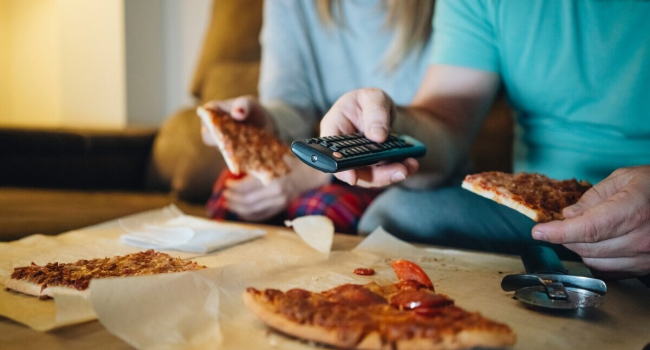
Scientists from the Worcester Polytechnic Institute in Massachusetts have found that watching television while eating increases the risk of overeating more than using a smartphone. The results of the study were published in the journal Physiology and Behaviour (PhyBeh).
The authors examined how different digital distractions affect the amount of food consumed. The experiment involved 114 men and women who were unaware of the study’s true purpose and believed it was about multitasking. All participants were offered the same set of snacks—chips and chocolate-coated candies—and were divided into three groups.
Participants in the first group watched television while eating, the second group used smartphones, and the third ate without any distractions. Researchers recorded the amount of food consumed.
The results showed that watching television significantly increased the caloric intake of snacks. On average, participants in the “television” group consumed about 164 kilocalories, whereas those who ate without distractions consumed around 131 kilocalories. At the same time, the difference between smartphone users and those who did not use any gadgets was minimal and statistically insignificant.
“Our results show that watching television is more likely to promote overeating and the development of less healthy eating habits,” the psychologists who conducted the study noted.
According to them, television strongly distracts attention, causing the brain to register less accurately what and how much has been eaten, which can lead to a feeling of insufficient satiety.
The authors suggest that smartphones have a smaller effect because both hands are engaged while using them. When watching television, the hands remain free, allowing a person to eat almost automatically. The researchers advise avoiding watching television during meals whenever possible in order to better control portion sizes and one’s own hunger and satiety signals.