Compounds in Dark Sweet Cherries May Slow Aggressive Breast Cancer
 19:21 12 March, 2026
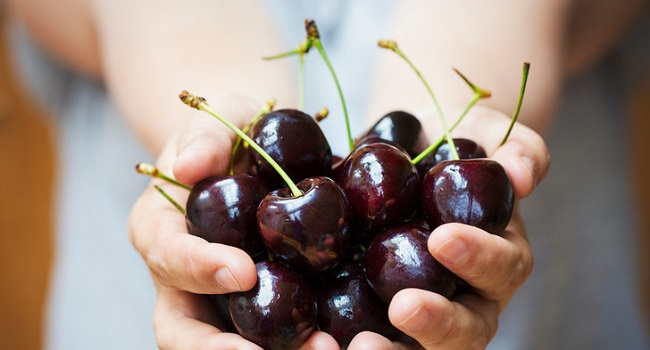
Scientists have found that compounds contained in dark sweet cherries may slow the growth of one of the most aggressive forms of breast cancer. This conclusion was reached by a group of researchers from Texas A&M University, who studied the effects of natural pigments from these berries on triple-negative breast cancer, one of the most difficult types of the disease to treat.
The results of the study were published in the journal International Journal of Molecular Sciences.
This type of cancer is characterized by the absence of three key molecular markers in tumor cells — estrogen receptors, progesterone receptors, and the HER2 protein. Because of this, standard hormone-based therapies are often ineffective, and the tumor itself tends to grow faster and spread more easily.
The focus of the study was anthocyanins — natural plant pigments that give dark cherries their rich red-burgundy color. These compounds are known for their antioxidant and anti-inflammatory properties, but the researchers wanted to determine whether they could also influence tumor development.
The experiments were conducted on mice. The animals were divided into several groups: one group received an anthocyanin-rich cherry extract before tumor formation, another was given chemotherapy after tumors developed, a third group received a combination of both treatments, and a control group received no treatment.
The results showed that tumors grew more slowly in mice that received anthocyanins and spread throughout the body much less aggressively. In particular, metastasis to the lungs and other organs was significantly reduced.
In addition, these animals maintained normal body weight and did not show pronounced side effects.
Further analysis revealed that anthocyanins altered the activity of genes associated with cancer spread and the resistance of tumor cells to treatment. This suggests a possible molecular mechanism through which these natural compounds may suppress tumor growth and aggressiveness.
However, the researchers emphasize that the findings currently come only from laboratory experiments in animals. Further clinical studies are needed to determine whether dark sweet cherries or their active components could actually be used for cancer prevention or treatment in humans.