WHO says Congo’s Ebola outbreak began months before it was officially declared
 20:06 10 August, 2026
The World Health Organization says the Ebola outbreak in eastern Democratic Republic of Congo began in February, several months before authorities officially declared it in mкакие вопросid-May. The delay has made it even harder for health teams to contain what is now described as the fastest-spreading Ebola outbreak on record.
WHO Regional Director for Africa Dr. Mohamed Yakub Janabi said Monday that genetic sequencing helped determine when the outbreak began. Some of the earliest cases were initially misdiagnosed as malaria or typhoid, allowing the virus to spread undetected.
“We are chasing the virus — the virus is ahead of us,” Janabi said at a news conference.
According to the latest government figures, more than 4,200 Ebola cases have been confirmed in the outbreak, including over 1,900 deaths.
The outbreak is unusual because it is being caused by the relatively rare Bundibugyo virus, for which there are currently no approved vaccines or specific treatments. Initial testing focused on the more common Ebola virus, contributing to delays in identifying the outbreak.
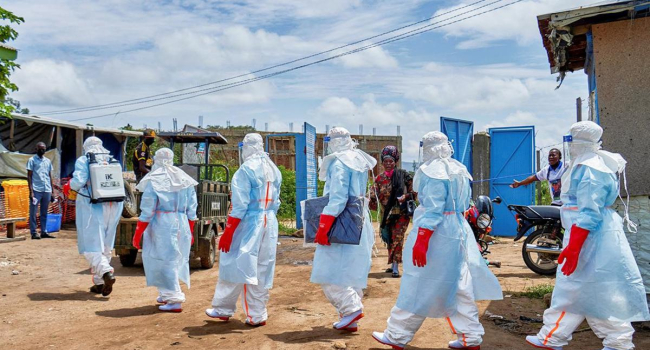
Health teams are now struggling to contain the disease amid difficult conditions in eastern Congo. Some healthcare workers have gone on strike over unpaid wages, while armed groups, misinformation and distrust among communities have complicated the response. Medical teams must travel long distances along remote, unpaved roads, and some areas are experiencing shortages of protective equipment.
The large number of displaced people in the region is also making infection-control efforts more difficult, particularly because many lack reliable access to clean water for handwashing.
The current outbreak has caused deaths at a faster rate than any previous Ebola outbreak. By comparison, the 2014–2016 West Africa outbreak, the deadliest Ebola epidemic on record at the time, resulted in more than 11,000 deaths among at least 28,000 confirmed and suspected cases. It took about eight months for that outbreak to reach 1,000 deaths.
Ebola is a rare but highly contagious viral disease that can spread through contact with infected bodily fluids or contaminated materials. It can cause severe illness and can be fatal.
Last week, WHO Director-General Tedros Adhanom Ghebreyesus warned that Ebola was spreading faster than response efforts. In some hotspots, the number of new cases was doubling, he said after meeting with officials in Kinshasa.
Health authorities estimate that between 60% and 70% of new cases are being identified outside the network of monitored contacts, a sign that the outbreak is spreading rapidly and that many chains of transmission remain undetected.
The situation is further complicated by years of armed conflict in the region, one of the most remote and vulnerable parts of Congo, near the borders with South Sudan, Uganda and Rwanda. Fear of Ebola is also affecting access to healthcare, with some pregnant women and other patients avoiding medical facilities because of concerns about infection.
Ebola outbreaks have been declared after significant delays in the past as well. During the 2014–2016 West Africa epidemic, for example, the outbreak was officially declared in March 2014, although the first human case was later determined to have occurred in December 2013.