Science: Obesity Impairs Breast Fat Tissue’s Ability to Destroy Potentially Cancerous Cells
 17:34 13 September, 2026
Scientists have discovered why obesity may increase the risk of breast cancer: it reduces the ability of breast fat tissue to destroy potentially cancerous cells. The study showed that in obesity, breast fat cells produce less of the molecule 9S-HODE, which promotes ferroptosis — a specific form of cell death. The work by researchers at the Huntsman Cancer Institute at the University of Utah was published in the journal Science.
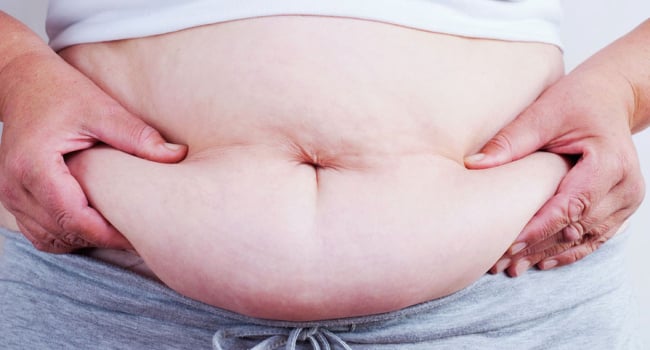
The breast is largely composed of adipose tissue, and its main cells — adipocytes — differ depending on body weight. With obesity, these cells become larger and create a different microenvironment around breast cells.
The researchers found that one of the key differences involves the production of 9S-HODE, a lipid, or fatty acid. In experiments using breast tissue obtained from donors, as well as preclinical models, the scientists found that fat cells from people with a healthy body weight produced significantly more of this molecule than fat cells from people with obesity.
9S-HODE promotes ferroptosis — a form of cell death that helps the body eliminate old and damaged cells, including potentially cancerous ones. As a result, cancer cells are more likely to die in tissue containing higher levels of 9S-HODE.
“We discovered a role for a molecule that is normally present in fat tissue and restrains breast cancer growth, but becomes less abundant with obesity,” said senior study author Keren Hilgendorf, a researcher at the Huntsman Cancer Institute and associate professor of biochemistry at the University of Utah.
In experiments with mice, increasing the amount of 9S-HODE in fat cells in obese animals suppressed breast tumor growth. According to the researchers, this finding opens the possibility of developing new treatments that could restore the body’s natural defenses.
“Because 9S-HODE is naturally present in the body but disappears with obesity, we may be able to restore this protection by bringing it back,” Hilgendorf said.
The authors emphasize that obesity is only one risk factor for breast cancer, and the disease can develop for many other reasons. It is also not yet known whether 9S-HODE performs a similar protective function in the adipose tissue of other parts of the body.