Breath test may help distinguish cancerous lung nodules from benign ones, study finds
 16:58 25 September, 2026
A non-invasive breath test could help doctors determine whether lung nodules are cancerous or benign, potentially supporting earlier lung cancer diagnosis and reducing the need for invasive procedures, according to Australian-led research.
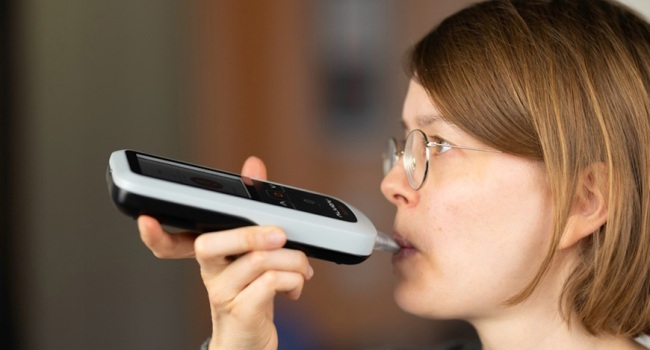
Scientists analyzed exhaled breath using two complementary methods. The first, an electronic nose (eNose), detects patterns in chemicals present in breath. The second, gas chromatography-mass spectrometry (GC-MS), identifies specific volatile organic compounds.
Both approaches were significantly more effective at distinguishing malignant lung nodules from benign ones than models based solely on standard clinical information, said Chamindie Punyadeera, a professor at Griffith University's Institute for Biomedicine and Glycomics and corresponding author of the study published in MedComm.
Lung nodules are currently evaluated using procedures such as CT-guided biopsy and bronchoscopy. In some cases, surgery may also be required to determine whether a suspicious nodule is cancerous. Researchers noted that around 2.5 million new lung cancer cases are diagnosed worldwide each year.
Study co-author Zhang Xi of Griffith University said biopsying lung nodules can be technically difficult, particularly when lesions are small or located in hard-to-reach areas. The procedure can also lead to complications, including a collapsed lung.
The researchers stressed that the breath test is not designed to replace biopsy. Instead, it could help physicians identify patients whose nodules are more likely to be malignant and prioritize those who need invasive testing.
The researchers also suggested that incorporating the non-invasive test into routine clinical care could eventually help reduce unnecessary invasive procedures in patients whose nodules are benign.