Winter or Summer Time: Which Is Better for Your Health?
 21:50 26 October, 2026
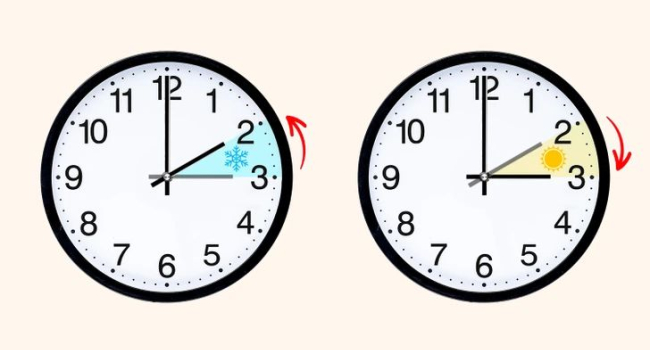
This weekend, many countries will turn their clocks back one hour, returning to winter, or “standard,” time, which is more closely aligned with the sun’s position after several months of daylight saving time.
The clocks are changed twice a year, and despite numerous attempts to abandon the practice, they are still moved forward and backward by an hour every spring and autumn.
Seasonal clock changes were introduced during World War I to save energy. Many countries revived the practice in the 1970s, Euronews reports.
However, researchers are now warning about the potential health consequences, particularly those associated with the springtime clock change.
But deciding whether to keep the practice is only the first step.
“Abolishing clock changes solves one problem but creates another: which time should we follow year-round?” says Raymond Lam, a professor of psychiatry at the University of British Columbia and lead author of a recently published analysis of the health effects of daylight saving time.
According to the authors, ending seasonal clock changes eliminates short-term disruptions, but the choice of a permanent time system determines the chronic, long-term effects on public health.
“The overall body of medical evidence favors standard time, mainly because morning light is important for our biological clocks, sleep and mood.”
Both options have advantages and disadvantages. Permanent daylight saving time means lighter evenings, which may encourage leisure activities, social interaction, commuting and certain types of economic activity.
However, sunrise would occur another hour later, meaning that more people would wake up, travel to school and commute to work in the dark during winter.
“Our biological clocks need morning light to stay synchronized with the 24-hour day,” explains Ralph Mistlberger, a professor of psychology at Simon Fraser University in Canada. “Permanent daylight saving time pushes that light exposure another hour later, precisely when winter mornings are already at their darkest.”
Permanent standard time preserves earlier winter sunrises, which naturally align more closely with human circadian rhythms and provide the morning light needed to synchronize our biological clocks.
As the analysis notes, exposure to light in the morning helps counteract the natural tendency of our biological clocks to run late, reduces sleepiness and supports alertness, sleep quality and mood.
The authors conclude that standard, or winter, time is the best option for health.
“Time policy is public health policy,” emphasizes Alexandra Choi, a public health physician with Vancouver Coastal Health.
“If governments decide to adopt permanent daylight saving time, they should prepare for its consequences before the first winter arrives — from ensuring safer morning commutes and offering flexible start times for work and school to monitoring sleep, mental health and injuries.”