Nature Communications: Vibration Changed Protein Markers in 29 Volunteers
 14:44 6 November, 2026
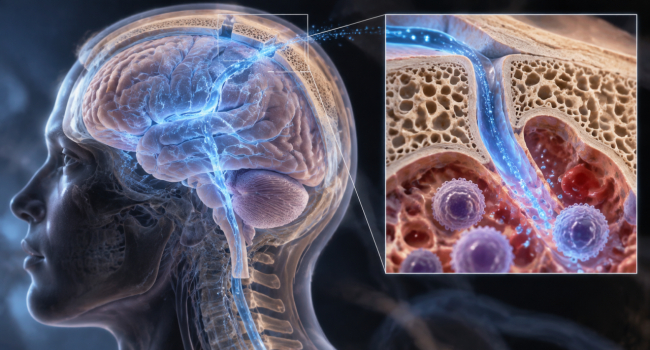
Combining a drug that temporarily dilates blood vessels and lowers blood pressure with vibration exposure was associated with signs of increased transfer of soluble brain proteins into the bloodstream. This was demonstrated by a small study conducted by researchers at the University of Oulu and Oulu University Hospital. The findings were published in the journal Nature Communications.
The randomized crossover study involved 29 healthy adults. The researchers used a nitric oxide-based drug and rhythmic whole-body vibration designed to target Piezo1 mechanosensitive channels in blood vessels.
The idea was to alter vascular pulsations associated with fluid movement in the brain. Such processes normally become more pronounced during sleep. Previous animal experiments have suggested that targeting vascular mechanisms can affect the movement of fluids and dissolved substances.
The researchers used MRI, physiological measurements and blood tests. Following the combined intervention, blood levels of beta-amyloid 40 and 42, as well as the protein GFAP, increased. At the same time, changes were observed in measurements of fluid movement and distribution in the brain.
According to the authors, the overall pattern of changes is consistent with a temporary redistribution of soluble proteins from the brain into the bloodstream. The effect was associated with age and the extent of the drug-induced reduction in blood pressure.
Under controlled conditions, the interventions were well tolerated. However, an increase in protein markers in the blood does not yet prove a reduction in pathological deposits or the prevention of Alzheimer's disease. The effectiveness of this approach in patients with memory impairment remains to be investigated.