Europe Scrambles to Prepare for Outbreaks of Tropical Diseases as Tiger Mosquitoes Spread
 08:28 7 November, 2026
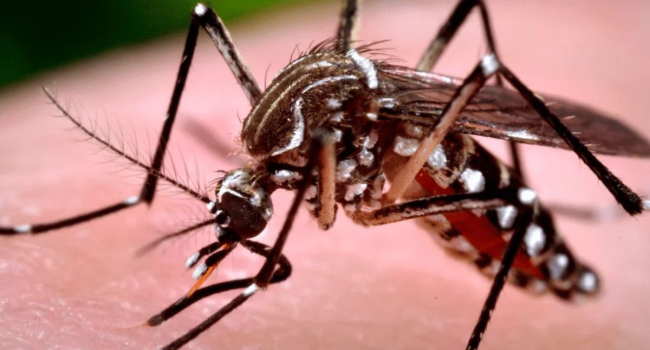
Mosquitoes that once lived only in tropical regions have now established themselves in several European countries and are spreading northward. Authorities are trying to contain dengue, chikungunya and Zika, while the public plays a key role in preventing their spread.
In September, Portugal released 30,000 sterile male mosquitoes in a second attempt to curb the growing tiger mosquito population.
The mosquito, once found mainly in Southeast Asia, was introduced to Italy as early as the 1990s in shipments of used tyres. Since then, it has spread to France, Spain, Germany, Switzerland and other European countries.
The diseases it carries, including dengue, chikungunya and Zika, are also advancing into Europe. Although cases remain sporadic in most European countries, EU authorities and national health agencies are working to prevent these diseases from becoming endemic within the bloc.
“The trajectory we are on does not look good,” environmental epidemiologist Jan Semenza told Euronews. “This is a problem that will stay with us unless we contain it as quickly as possible.”
These diseases are transmitted through mosquito bites. Infected travellers returning from tropical countries can bring the viruses back to Europe, where local mosquitoes pick them up and transmit them to others.
“Many people return from holidays in Thailand, Brazil or other places where these tropical diseases are widespread, bringing the viruses back with them,” Semenza said. “They are bitten by a local mosquito, which then bites another person and infects them, leading to a local outbreak.”
By the end of October 2026, Italy had reported 76 locally acquired dengue cases, while France had reported eight. This was roughly twice the number recorded in 2025. In response, Portugal decided to tackle the problem by releasing male mosquitoes sterilised through radiation. They can mate with females but cannot produce offspring.
“What we are fighting against is the possibility of becoming an endemic country,” André Peralta Santos, deputy director-general of Portugal's Directorate-General of Health, told Euronews.
Other methods are also available. One approach, used in Brazil several years ago, involved infecting mosquitoes with the Wolbachia bacterium, which blocks the viruses' ability to infect them. However, while there are ways to reduce mosquito populations and limit disease transmission, completely eradicating these insects is unrealistic.
“You cannot sterilise the environment in an autoclave,” Semenza said. “Once a mosquito has established itself, it stays, and there is nothing you can do about it.” The only option is to prepare.
According to Semenza, this requires “a combination of measures”, ranging from mosquito population control to vaccines and antiviral drugs. One of the most important elements is community involvement.