Breathing Restored, but Weight Gain Continues: What Happens After Sleep Apnea Treatment
 22:44 11 November, 2026
Scientists have identified a possible biological mechanism that could explain why some adults and children gain weight after successful treatment for obstructive sleep apnea. Experiments in mice showed that the body may retain a kind of “metabolic memory” of prolonged breathing disturbances, causing appetite to remain elevated even after normal breathing has been restored. The findings were published in the journal Scientific Reports.
The study was conducted by researchers from Ben-Gurion University of the Negev and Soroka Medical Center in Israel. It was led by Ariel Tarasiuk, head of the Sleep-Wake Disorders Unit at Soroka Medical Center, and Yael Segev of Ben-Gurion University.
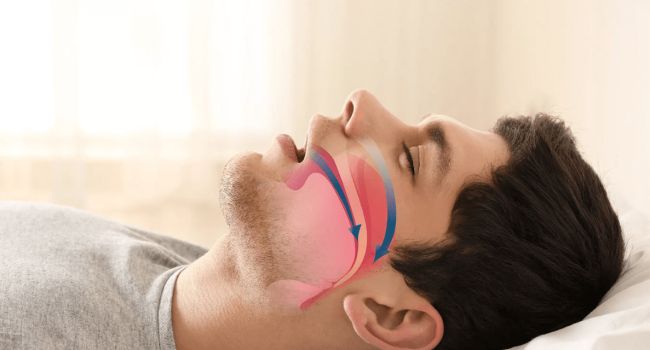
Obstructive sleep apnea is a common disorder in which the airways become repeatedly blocked during sleep. Treatment options include the removal of the tonsils and adenoids or continuous positive airway pressure (CPAP) therapy. However, a significant proportion of patients experience weight gain after successful treatment, and the reasons for this have remained unclear.
In experiments involving mice, the researchers identified two stages of the metabolic response. During prolonged airway obstruction, the body experienced persistent physical stress that activated the sympathetic nervous system, which is responsible for the “fight-or-flight” response. This increased energy expenditure and initially led to weight loss.
After the airway obstruction was eliminated, sympathetic nervous system activity did not immediately return to normal. The persistent overactivity was accompanied by increased appetite, ultimately resulting in an average 15% increase in the mice's body weight.
Even medication-induced reductions in sympathetic nervous system activity only partially limited weight gain. According to the researchers, this points to deeper changes: adipose tissue and the autonomic nervous system may retain a cellular “memory” of the physical stress they have experienced.
“When the obstruction is removed, these mechanisms do not switch off immediately. The autonomic nervous system continues to function as if the physical threat were still present, contributing to weight gain after treatment,” Tarasiuk explained.
The authors believe that after sleep apnea treatment, some patients may need not only follow-up care from sleep and respiratory specialists but also monitoring of their diet and metabolism. However, the findings are currently based on animal experiments, and further research is needed to confirm whether the same mechanism occurs in humans.
In future studies, the researchers plan to investigate ways of targeting this “metabolic memory” to prevent weight gain after normal breathing has been restored.