make preferable
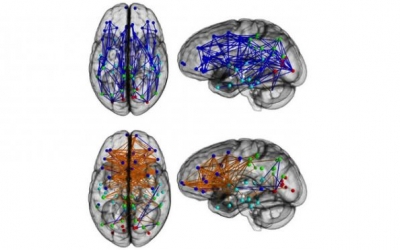
The research, which involved imaging the brains of nearly 1,000 adolescents, found that male brains had more connections within hemispheres, whereas female brains were more connected between hemispheres. The results, which apply to the population as a whole and not individuals, suggest that male brains may be optimized for motor skills, and female brains may be optimized for combining analytical and intuitive thinking, Fox News reports.
Previous studies have found behavioral differences between men and women. For example, women may have better verbal memory and social cognition, whereas men may have better motor and spatial skills, on average. Brain imaging studies have shown that women have a higher percentage of gray matter, the computational tissue of the brain, while men have a higher percentage of white matter, the connective cables of the brain. But few studies have shown that men's and women's brains are connected differently.
In the study, researchers scanned the brains of 949 young people ages 8 to 22 (428 males and 521 females), using a form of magnetic resonance imaging (MRI) known as diffusion tensor imaging, which maps the diffusion of water molecules within brain tissue. The researchers analyzed the participants as a single group, and as three separate groups split up by age.
As a whole, the young men had stronger connections within cerebral hemispheres while the young women had stronger connections between hemispheres. Roughly speaking, the back of the brain handles perception and the front of the brain handles action; the left hemisphere of the brain is the seat of logical thinking, while the right side of the brain begets intuitive thinking. The findings lend support to the view that males may excel at motor skills, while women may be better at integrating analysis and intuitive thinking.
When the researchers compared the young people by age group, they saw the most pronounced brain differences among adolescents (13.4 to 17 years old), suggesting the sexes begin to diverge in the teen years.
The findings could also help scientists understand why certain diseases, such as autism, are more prevalent in males.