make preferable
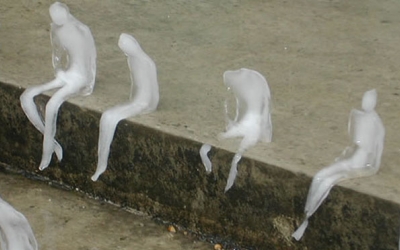
Suspended animation: It’s a common concept used in science fiction, in which doctors preserve humans’ lives by suspending them between life and death.
But now, the seemingly fictional idea may soon become a medical reality, the Fox News reported.
According to a report in New Scientist, researchers at the UPMC Presbyterian Hospital in Pittsburgh, Penn., are set to perform the first ever human clinical trials utilizing suspended animation. Surgeons involved in the research will perform lifesaving surgery on 10 critically wounded patients, who will have been drastically cooled down to the point where their bodily functions have almost ceased.
The procedure involves replacing a patient’s entire blood supply with cold saline solution, which essentially induces hypothermia and slows down all cellular activity. This gives the surgeons more time to operate on individuals who have extreme life-threatening injuries. Then, once the wounds are repaired, surgeons will gradually warm the patients back up by slowly replacing the saline with blood.
"If a patient comes to us two hours after dying, you can't bring them back to life. But if they're dying and you suspend them, you have a chance to bring them back after their structural problems have been fixed," says surgeon Peter Rhee, of the University of Arizona in Tucson, who helped develop the technique.
The success of the technique all revolves around how the body’s cells utilize oxygen. At normal body temperature, cells need a regular supply of oxygen from the heart to function. But if the heart stops beating, blood no longer carries oxygen to the rest of the body, causing irreversible damage to the brain’s cells.
Yet at colder temperatures, the body’s chemical reactions have slowed almost to a halt, meaning cells require much less oxygen to function. This is why sometimes before heart or brain surgery, surgeons will lower a patients’ body temperature with an external cooling system, to give themselves more time to operate.
Rhee and his colleagues first demonstrated the success of the suspended animation technique on pigs in 2000, and now they are prepared to try the procedure on humans. The researchers believe that if their experiments work, the definition of the word “dead” will change.