make preferable
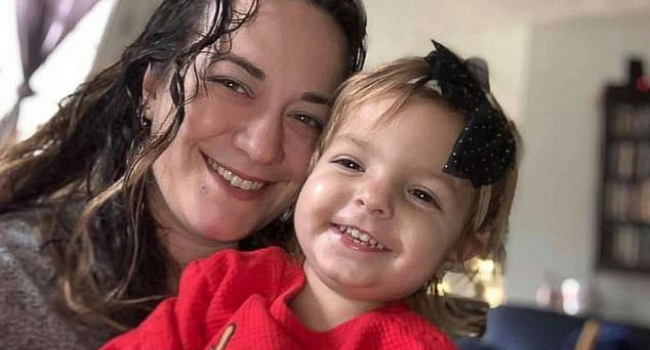
A two-year-old girl is battling ovarian cancer in an incredibly rare case. McKenna 'Kenni' Shea Xydias was diagnosed with ovarian yolk sac tumor on February 15 after developing a 103F fever and a bloated belly. At first, her pediatrician in Senoia, Georgia thought she had a bubble of gas in her bowels, judging by an X-ray. But an ultrasound revealed something more sinister: a mass in her ovaries. Her parents, Mike and Meagan Xydias, were stunned when the results of her CT and MRI scans came back: tumors scattered all over her abdomen, one near her liver, and one - a staggering 14 centimeters long - on her right ovary. Kenni is believed to be one of the youngest to suffer from this rare type of cancer, which normally affects girls aged 10 to 30 years old. She has had her right ovary removed, and part of her small intestine. Painfully, as Mike and Meagan arrange chemotherapy and possibly other treatments, they also have to meet with fertility doctors to discuss Kenni's prospects for childbearing down the line. 'We try to take every day one step at a time, but having to consider how these tumors and consequential chemo will potentially effect Kenni in the long run, forces us to look at the big picture as well,' Mike wrote on their GoFundMe page. 'Not sure we're quite ready for big picture just yet. Smaller bites can be easier to swallow.' Speaking to GMA, he said: 'I didn't realize that it could happen to such a young kid.' He added: 'I know Meagan and I both agree that Kenni is our hero with how she's dealing with this. She is a ball of energy and a stereotypical 2-year-old. She's the youngest child, where she is the boss and she's extremely stubborn, which a great character trait in going to fight cancer. She doesn't let anything stop her.' Kenni's type of cancer (a yolk-sac tumor) falls under the umbrella of Ovarian Germ Cell Tumors, also known as GCTs. They account for 25 percent of all ovarian tumors, including benign ones. Twenty percent of all ovarian tumors are cancerous. Of all the cancerous ovarian tumors, just 20 percent of those are cancerous yolk-sac tumors. In a nutshell: it is not common at all. But the few younger people who develop ovarian cancer are more likely to develop this rare type than the more common types. 'This is very, very rare,' Dr Robert Wenham, Chair of Moffitt Cancer Center's Gynecological Oncology Department told DailyMail.com, adding: 'It is the youngest of which I have heard.' 'Growth can be rapid,' he said. 'Swelling and pain are the most common' symptoms.
'The good news is the five-year survival for treated patients is relatively high ranging from around almost 100 percent for stage 1 down to 70 percent for stage 4.' According to Dr Wenham, while surgery to remove the tumor is recommended, it's not clear how effective it is. However, with younger patients, doctors are likely to be performing surgery anyway to preserve what normal ovaries and uterus lining they can for fertility purposes. The most effective type of treatment for patients like Kenni is chemotherapy. 'Almost all patients will need chemotherapy, usually with three drugs called bleomycin, etoposide, and cisplatin,' he said. 'There is some support to substitute carboplatin for cisplatin to lessen toxicity.' It's not clear what chemotherapy Kenni will be taking. For now, the family is sharing their story, asking well-wishers to keep them in their thoughts, as family friends try to rally funds to pay Kenni's medical bills. 'This poor baby needs your prayers,' they wrote on Facebook.
Source: The Daily Mail