make preferable

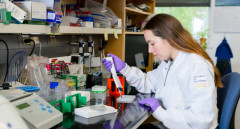
Approximately 99.6 percent of Alzheimer’s disease drug trials are unsuccessful, according to new research from the Cleveland Clinic.
Using data from ClinicalTrials.gov – a government website that tracks ongoing clinical trials – researchers discovered that from 2002-2012, 244 drugs had been tested— and only one drug was a success, FoxNews reports.
“We’re looking forward from 5.5 million victims [now] to around 14 million by 2050 if we don’t develop something. Yet we’re meeting this with a trickle of success in terms of drug development,” lead author Dr. Jeffrey L. Cummings, director of the Cleveland Clinic Lou Ruvo Center for Brain Health, told FoxNews.com. “The dramatic message is that Alzheimer’s disease drug development is in a disastrous state and we have to change this.”
Alzheimer’s disease is the most common form of dementia and causes memory, thinking and behavior problems. According to the Alzheimer’s Association, there is no current cure, though some symptoms are treatable.
Alzheimer’s memory problems appear to be caused by the formation of two major tissues in the brain – plaques and tangles. Plaques form when beta-amyloid proteins clump together, blocking cell-to-cell signaling. According to Cummings, plaque appears to come first in the degeneration process, but these clusters do not seem to damage the brain’s cells. Tangles are twisted strands of the protein tau. When they begin to form, nerve cells begin to die, causing memory failure, personality changes and other symptoms of the disease.
Currently, most drugs have been aimed at preventing plaque buildup, but the high failure rate of these drugs suggests the need for a better understanding of the disease itself, as well as a broader focus on other drug targets, such as the cell-killing tangles.
Another consideration is the economic impact of Alzheimer’s disease. According to the Alzheimer’s Association, in 2014, the estimated cost to Americans for the care of those of Alzheimer’s will be $214 billion— and an estimated $1.2 trillion in 2050.
“We are investing about $600 million per year in Alzheimer’s research and about $6 billion per year in cancer research… at the same time that Alzheimer’s is having a larger impact on the U.S. economy,” Cummings said. “That doesn’t mean we should be doing less cancer research; we should be doing more Alzheimer’s research.”
Lack of standardization among clinical trials is another roadblock to drug testing success, as inconsistent procedures can make data appear to be more or less successful, Cummings noted.