make preferable
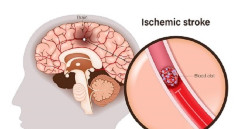
When infants have a stroke, a healthy part of the brain can take over the functions of the affected hemisphere. This was the conclusion reached by researchers from Georgetown University in Washington, whose article was published in the Proceedings of the National Academy of Sciences. The researchers included 15 adolescents and young adults who had suffered an arterial ischemic stroke in infancy, which occurs when an artery in the brain is blocked by a blood clot. The condition occurs in one in four thousand newborns. In all participants, the stroke damaged the areas responsible for speech in the left hemisphere of the brain. Despite this, they all had normal test results for language skills, including the ability to process spoken words and sentences and to distinguish emotions by voice. MRI scans showed that responsibility for all language skills shifted from the left hemisphere to the frontotemporal cortex of the right hemisphere. Interestingly, this part of the brain is usually responsible for interpreting emotions, but not the meaning of words. Such brain damage would surely ruin an adult's communication skills. Scientists believe that the plasticity of infants' brains is due to the fact that their different functions are not as tied to one hemisphere as they are in adults. All participants in the study had some long-term effects of early-onset stroke, including paralysis of the right arm and mild problems with short-term memory and information processing speed. This, however, did not prevent them from getting an education and leading normal lives.