make preferable
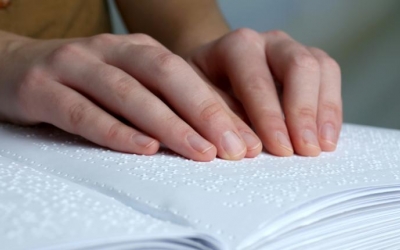
For most of us, our sense of touch is just that; being able to feel things. But to neuroscientists studying it, it’s a lot more complex, with different receptors and parts of the brain reacting to contact with an object in their own way. A new study from the University of Chicago, however, suggests this isn’t entirely the case.
For nearly 60 years, studies have suggested that a person’s sense of touch is really three different brain processes working on their own to convey specific information, and triggered by their own receptors, also called afferents. Slowly adapting type 1 (SA1) are receptors responsible for telling the brain about the shape and texture of an object. Rapidly adapting (RA) afferents help the brain recognize motion and control grip, and Pacinian afferents are responsible for signaling vibrations to the brain, Medical Daily reports.
“Any time you touch an object, all of these afferents are active together,” said Dr. Sliman Bensmaia, assistant professor of organismal biology and anatomy at the university, in a press release. “They each convey information about all aspects of an object, whether it’s the shape, the texture, or its motion across the skin.” Bensmaia found that rather than working individually to convey the aforementioned specific information, they work in concert to create the overall sensation, even if one contributes a little more to the feeling than the other.
He and his team came to this conclusion after looking at more than 100 studies published over the past 57 years. During the review, the team found that a majority of the tests performed were examples of how testing for individual afferents could be misleading.
While the study won’t do much for us regular folk besides giving us a better understanding of the science behind one of our senses, Bensmaia believes it’ll be valuable for future neuroscientists. “I think it’s going to change neuroscience textbooks, and by extension it’s going to change the way somatosensory neuroscience is taught,” he said. “It’s really the starting point for everything.”