make preferable
However, Google developers emphasize that this type of simulated testing cannot fully replace real clinical practice.
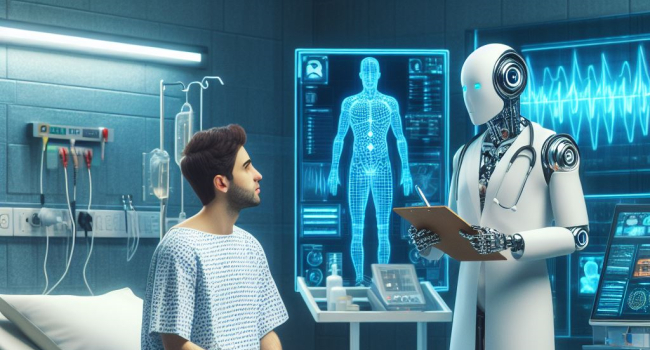
Google has introduced a new medical artificial intelligence system called Articulate Medical Intelligence Explorer (AMIE), which is capable of outperforming experienced doctors in diagnostic accuracy based on images.
According to Nature, the system is built on the advanced Gemini 2.0 Flash language model, which can efficiently process both textual and visual information. This versatility allows the AI to analyze a wide range of medical data, including ordinary photographs, scanned documents (e.g., PDFs), and laboratory test results. The system has been trained to detect skin conditions, interpret electrocardiograms (ECGs), and analyze lab indicators.
To assess AMIE’s performance, Google researchers conducted a series of simulated medical consultations. A total of 105 scenarios were created involving 25 actors simulating patients with various symptoms. During these trials, both the AMIE system and a group of qualified physicians provided diagnoses based on the given visual and textual data. An independent panel of experts then evaluated the diagnostic accuracy of both sides.
The results showed that the artificial intelligence system demonstrated, on average, higher accuracy than the doctors—especially when working with complex or non-obvious images.
Still, Google developers emphasize that this type of simulated testing cannot fully substitute real clinical practice. They stress the need for further, larger-scale studies conducted in more realistic conditions before AMIE can be widely implemented in medicine.