make preferable
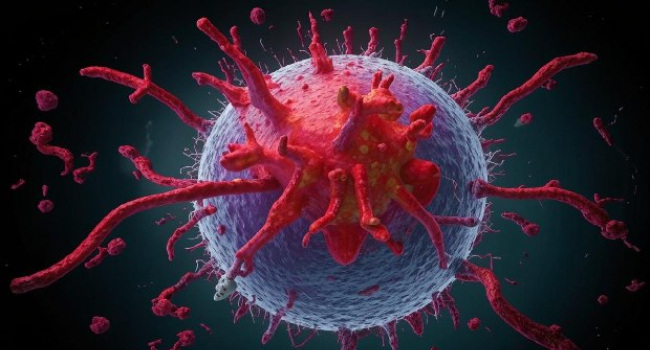
Scientists at Texas A&M Health have discovered that certain types of cancer use ribonucleic acid (RNA) molecules in an unusual way: as building blocks to form unique liquid-like structures inside cells that accelerate tumor growth. The study was published in Nature Communications.
Typically, RNA serves as a “messenger” carrying genetic information for protein synthesis. However, researchers found that in aggressive forms of kidney cancer, specifically translocation renal cell carcinoma (TRCC), RNA is hijacked and transformed into structures that form “liquid centers” within the cell nucleus. These centers act as command hubs, activating genes responsible for tumor growth.
TRCC often affects children and young adults. It arises from so-called TFE3 oncogenic fusions—genes created by chromosomal rearrangements and fusions. Until now, it was unclear why these fusions make tumors so aggressive.
The team discovered that in the presence of oncogenic fusions, RNA molecules stop being passive carriers of information and start forming liquid condensates—microscopic droplets invisible to the naked eye. These “liquid centers” activate genes that drive cancer cell proliferation.
The next step was developing a chemogenetic tool: a molecular “switch” capable of dissolving the condensates. Based on a soluble protein-linked nanobody, the structure disassembles when triggered by a chemical signal, halting cancer cell growth. This effect was confirmed in both cell cultures and mouse models.
“Targeting condensate formation offers a new therapeutic approach. Since many pediatric cancers are also associated with fusion proteins, condensate-dissolving technology could become a comprehensive strategy to combat cancer cells—literally dismantling them at their source,” said Professor Yubin Zhou, director of the Translational Cancer Research Center.