make preferable
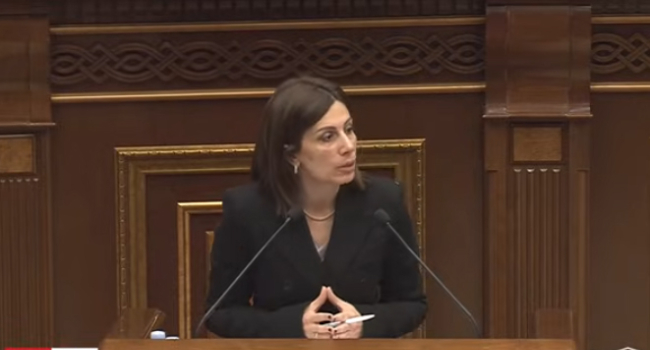
The basic health insurance fee in Armenia will be set at 10,800 drams per month. This was announced by Health Minister Anahit Avanesyan during the debates on amendments to the package of bills on universal health insurance and related laws of Armenia at the National Assembly session Tuesday.
According to the draft, the reimbursement, which will overall cover about 30 percent of the most demanded medical services in Armenia, will apply to certain types of medicines. If people wish to purchase more expensive medicines, they will have to pay the difference.
Regarding medical care, services provided for transporting a patient to a hospital by ambulance, as well as subsequent inpatient treatment or surgery, will be paid within the established amount. If necessary, the patient will have to pay the excess amount themselves. In the future, coefficients are planned to reduce state payments for persons who abuse tobacco and alcohol.
If, after calling an ambulance and a medical examination, the patients do not receive a hospitalization referral but still consider that they need a course of treatment, they will be sent to a polyclinic for tests. Health insurance will cover tests, but in this case inpatient treatment will be paid by the person.
To receive health insurance coverage in Armenia, people must download the Ministry of Health’s Armed app and register. The app was launched during the COVID-19 pandemic and currently has about 700,000 active users. Elderly people who cannot register without help will be assisted by the outpatient clinic staff, who will call them and provide assistance.
The aforesaid app will publicize lists of medical services available under health insurance, as well as mandatory scheduled medical examination dates. Users will receive reminders. If mandatory examinations are missed, health insurance coverage will be suspended until they are carried out. This mechanism is planned to be implemented starting from 2028.
The basic health insurance fee is set at 10,800 drams (approx. US$28) per month. Part of this amount will be reimbursed from previous contributions made to the ZINAPAH National Foundation for Servicemen Insurance. Foundation payments, which were increased in 2021, will return to the previous level of 1,000 drams, regardless of salary.
For persons with monthly incomes from 200,000 to 500,000 drams, current contributions to the aforesaid foundation amount to 5,500 drams, which will be reduced to 1,000 drams after the reform. The 4,500-dram difference will be applied toward the health insurance fee. In addition, such persons can receive up to 6,000 drams as social credits, which are reimbursements for education and healthcare expenses upon submitting a tax declaration. Overall, they will be reimbursed 10,500 drams, making their actual monthly payment 300 drams. Social credits will be refunded retroactively after submitting the declaration.
For persons with monthly incomes from 500,000 to 1,000,000 drams, contributions to the ZINAPAH National Foundation for Servicemen Insurance amount to 8,500 drams. Of this, 7,500 drams will go toward medical insurance. On the account of social credits, they will be able to cover up to 4,000 drams of the monthly fee, and this will potentially enable full reimbursement of health insurance payments.
Persons with monthly incomes over 1,000,000 drams will maintain the previous amount of contributions to the aforesaid foundation—that is, 15,000 drams. At the same time, they also will be able to rely on up to 4,000 drams in social credits to cover health insurance fees.
According to the health minister, these proposed changes were developed from scratch and will regulate the entire legal framework of medical insurance in Armenia, from service package content to reimbursement and complaint review procedures.
“The proposed measures include the creation of a state fund to manage the medical insurance system, since private funds do not generally view universal [health] insurance as sufficiently appealing. During the first three months, the fund will operate under temporary management. Thereafter, its board of directors will form the state competition commission,” Avanesyan said.
In 2026, a total of 127 billion drams from Armenia’s state budget are planned to be allocated to implement this medical insurance system. The funds will be managed by the State Medical Insurance Fund. Its head will report to parliament annually on work performed, financial flows, and the next year’s planned activities.
The health minister added that during the transition period, state-run and private medical institutions in Armenia must invest in development to increase their capacities.
“Our goal is to ensure that by 2029, the overwhelming majority of the Republic of Armenia’s population has access to this system and is provided with necessary primary healthcare services,” Avanesyan said.
The first phase of transitioning to the universal medical insurance system will begin in 2026. The system will include two groups: individuals covered by the state (minors under 18, persons 65+, persons aged 18–65 with disabilities in groups I–III, and families with a social vulnerability score of 28 or more), and 190,000 employed persons with monthly incomes exceeding 200,000 drams. The state will fully cover expenses for the first category.
The Armenian government approved the concept of the universal medical insurance system back in February 2023. At the same time, however, expert circles in the country believe the proposed model contains significant risks.