make preferable
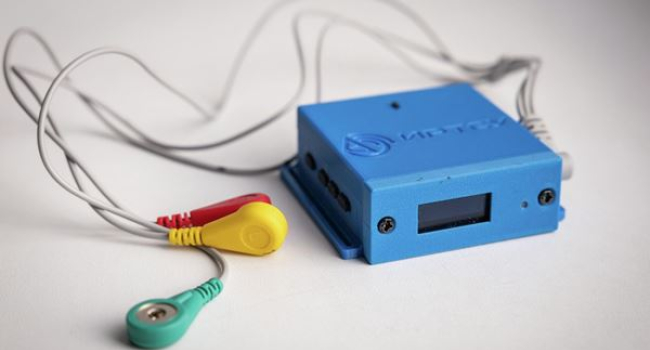
Engineers from Southern Federal University (SFedU) have developed a device capable of analyzing the condition of people with heart disease in real time and sending an SOS signal in critical situations. This was reported by the university’s press service.
The problem of sudden cardiac arrest in people with coronary heart disease and other pathologies is often compounded by the fact that an attack occurs when the person is alone, according to RIA Novosti. SFedU noted that existing sports trackers and medical Holter monitors—devices that record ECG data for 24 hours or longer—are not able to promptly “call” for help.
To address this challenge, specialists from SFedU’s Advanced Engineering School created a physical-activity cardiac recorder—a portable hardware-and-software system that assesses deviations from an individual’s normal physiological state.
As explained by one of the study’s authors, Sergey Sinyutin, Head of the Department of Embedded and Radio Receiver Systems at SFedU, the device—similar in appearance to a compact fitness tracker—continuously records physiological indicators and transmits them to a smartphone via Bluetooth. A dedicated mobile application then performs an initial analysis of the data and provides feedback to the user, such as whether to continue exercising, reduce the pace, or take a break.
“Our development is a synthesis of three approaches: Holter monitoring for detailed ECG recording, telemetry for continuous data transmission, and a personal tracker that not only collects but also analyzes information in real time. The key technical task we solved was the synchronous recording and comparison of two data streams: cardiovascular system parameters (heart rate, heart rate variability) and movement parameters (accelerometry).
This makes it possible to detect signs of changes in functional state before a disruption occurs, preventing a breakdown in the body’s adaptive mechanisms,” said the project leader, Head of the Laboratory Oksana Shpakovskaya.
In a critical situation, the cardiac recorder automatically sends an SOS signal with geolocation to the smartphones of relatives, noted SFedU Associate Professor Antonina Leonova. In addition, all data are transmitted to a secure cloud storage system, access to which can be granted to the attending physician for remote monitoring and adjustment of the rehabilitation plan.