make preferable
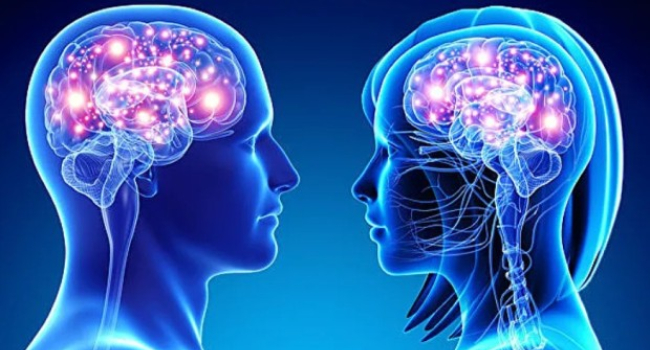
On February 1, 2026, scientists identified a previously unknown cluster of neurons in the brain that functions noticeably differently in men and women, which may help explain some differences in social behavior between the sexes.
In a study published in Proceedings of the National Academy of Sciences, researchers from the Israel-Canada Medical Research Institute at the Hebrew University of Jerusalem found a small group of cells in the medial amygdala — a brain region that plays a key role in social interactions, emotional processing, and reproductive behavior.
The main surprise was not just that this brain region differs in activity between men and women, but that the difference is very sharp — almost like an "on/off switch." In adulthood, this cluster is constantly active in women under normal conditions, whereas in men it is usually inactive and “switches on” only in specific situations, such as social or reproductive events.
The researchers note that before puberty, the activity of this group of cells was roughly the same in boys and girls. However, after puberty, activity decreased in males and then increased only in response to certain social stimuli, for example after sexual activity. This suggests that the brain can dynamically reorganize neural circuits based on life experiences and social circumstances, not just a fixed set of hormonal signals.
Such differences in brain activity are unusual in sex-related studies, because most known sex differences in the nervous system are subtle and distributed across many brain regions. In contrast, this cluster shows an almost binary pattern — it is not “slightly higher or lower,” but a clear difference in activity depending on sex and social context.
This discovery may become an important part of a new understanding of how the brain organizes sex-related differences in social behavior, and how experiences, such as social interactions and reproductive events, can influence neural circuits. It does not suggest that one sex is “better” than the other, but highlights that the brain can adapt its mechanisms depending on social and life circumstances, and that these adaptations can have very specific neural correlates.