
 make preferable
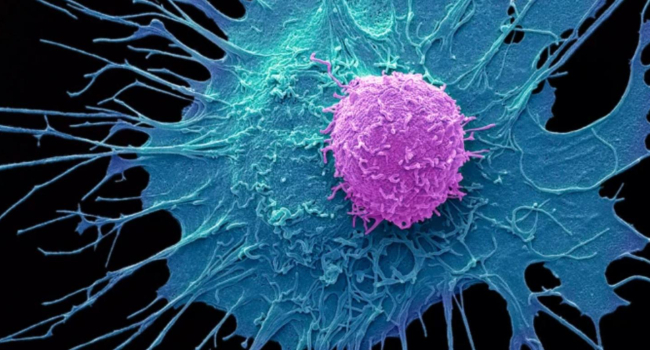
Cancer remains one of the leading causes of death worldwide and is characterized by the uncontrolled growth of abnormal cells. A particularly dangerous feature is the ability of cancer cells to move rapidly through the body, allowing them to invade surrounding tissues. While this behavior has long been observed, the mechanism behind such rapid spread has remained unclear — until now.
Researchers at Kyushu University have identified a new physical process that helps cancer cells migrate quickly.
The study was led by Professor Junichi Ikenouchi of the Faculty of Medical Sciences at Kyushu University, in collaboration with colleagues from the same institution and Yokohama City University. The findings were published in The EMBO Journal.
The scientists demonstrated that water pressure generated inside the cell facilitates cancer cell migration.
Healthy cells typically move by attaching to surfaces and pulling themselves forward, a process targeted by some existing therapies. Cancer cells, however, can bypass this mechanism by using a different strategy known as amoeboid migration. In this mode, cells form temporary membrane protrusions called “blebs,” which allow them to squeeze through narrow spaces without adhering to surrounding structures.
For a long time, it was believed that bleb expansion was purely driven by internal pressure. However, Ikenouchi’s 2021 research challenged this view. The team found that expanding blebs exhibit specific cytoplasmic properties, including elevated calcium ion concentrations, suggesting an active rather than passive process.
Continuing their investigation, the researchers discovered increased levels of calcium/calmodulin-dependent protein kinase II (CaMKII) in the cells and hypothesized that this protein could play a direct physical role in shaping the cell and driving its movement.
They found that at the onset of bleb growth, calcium concentration inside the cell rises. In response, CaMKII changes its structure and clusters with other molecules to form a large protein supercomplex. This complex acts as an osmotic engine: it creates a concentration gradient that draws water into the bleb via osmosis. The incoming water pushes the membrane outward, enabling rapid bleb expansion. The researchers named this process CODE — “CaMKII-based osmotically-driven deformation.”
According to Ikenouchi, cells can generate mechanical force simply by redistributing proteins internally: the accumulation of CaMKII produces pressure that physically pushes the membrane outward.
This discovery is significant for molecular biology because most aggressive cancer cells use amoeboid movement. Current therapies primarily target cell division or adhesive migration. Understanding the CODE mechanism opens the door to new treatment strategies aimed directly at amoeboid motility.
Beyond oncology, understanding how cells generate force by altering their physical properties could have implications for regenerative medicine, developmental biology, and tissue engineering. The findings may inspire new therapeutic approaches that focus on cellular mechanics rather than traditional signaling pathways.





