
 make preferable
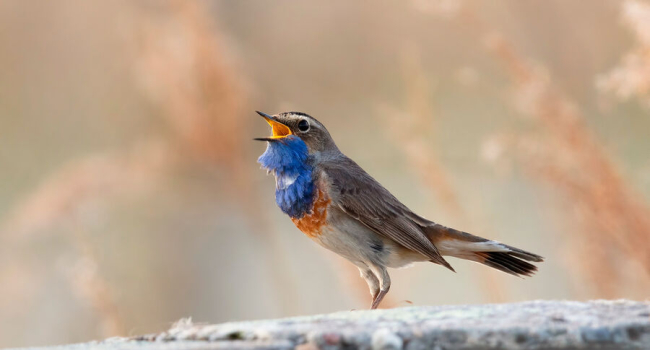
Birdsong has a profound effect on human psychology. According to a new study, bird diversity and birdsong influence life satisfaction as much as higher income.
The more birds are singing and the greater the diversity of bird species in the environment, the happier and more satisfied people tend to be. This is the conclusion reached by a German research team.
For the study, researchers combined biodiversity data with information on life satisfaction and income. Their database included information from 26,000 people across 26 European countries.
The result: people are happier in areas with a greater variety of bird species, reports Euronews. For example, a 10% increase in bird species diversity in a region was associated with higher happiness levels. However, the difference was less pronounced compared to a 10% increase in income.
The European Quality of Life Survey (EQLS) is conducted every four years. Around 26,000 Europeans answer questions on demographic and socio-economic topics, including income, marital status, education level, place of residence, and health status.
At the same time, data on biodiversity and other environmental and climate factors were also needed. These were obtained using geospatial data such as species distribution maps and satellite imagery, allowing researchers to compare different natural factors.
The study examined correlations not only between life satisfaction and bird diversity, but also with species richness of mammals, trees, and other natural elements. The result was striking: a significant correlation was found only with bird species diversity. However, the researchers note a limitation—life satisfaction is difficult to measure statistically, and other physical and psychological factors were not fully accounted for.
According to the study, birds are particularly well-suited as indicators of biodiversity. They are among the most noticeable elements of nature, especially in urban areas, since their songs can be heard even when the birds themselves are not visible.
“We also analyzed socio-economic data from participants and, to our great surprise, found that bird diversity is just as important for life satisfaction as income,” explains Professor Katrin Böhning-Gaese, director of the Senckenberg Biodiversity and Climate Research Centre.
For example, 14 additional bird species in a neighborhood would increase life satisfaction as much as an additional €124 per month in household income, based on an average monthly income of €1,237 across the 26 European countries studied.
In a separate 2025 study, participants took a 30-minute walk through the botanical garden of the University of Tübingen. Before and after the walk, saliva samples were taken and blood pressure and heart rate were measured.
The results showed that after the walk, participants generally felt more energetic, calm, and balanced. Cortisol levels—often called the stress hormone—were lower in saliva samples after the walk, as were heart rate and blood pressure, indicating partial recovery.
However, researchers noted that the effects on physical parameters still require further investigation. One additional finding was that participants instructed to pay attention to birdsong showed, on average, better recovery indicators.
Participants also reported a stronger sense of nature and more positive emotions after the walk. The group that listened attentively to birdsong experienced a significantly stronger connection to nature than the control group.
The study suggests that people value perceived diversity, regardless of the actual number of species. This may be because most people are not consciously aware of it, and the positive effect could be linked to a stronger sense of connection with nature.





