make preferable
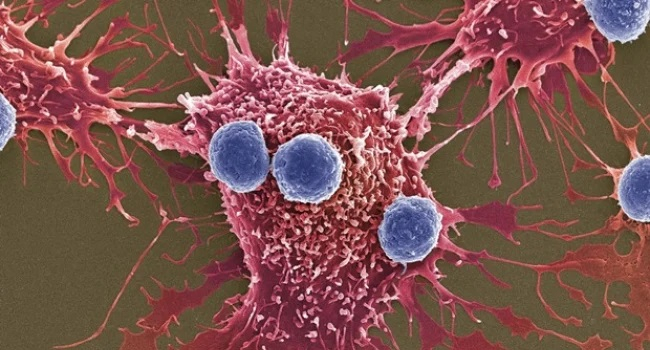
A scientific paper посвящённая the so-called “Oncodarwinian Hypothesis” (OdH) presents a highly unconventional view of the nature of cancer.
The study was published in the journal Exploratory Research and Hypothesis in Medicine.
The author argues that a tumor may be more than just a disease or the result of genetic mutations — it could represent a kind of evolutionary adaptation mechanism of the body.
According to the hypothesis, cancer functions as a “self-learning immune-adaptive algorithm” that the body activates in an attempt to cope with damage and stress. In this framework, uncontrolled cell division is viewed not only as a pathology, but also as a potential “misguided attempt at healing.”
A key role in the theory is assigned to the p53 protein, one of the cell’s main defenses against mutations. Under normal conditions, p53 repairs damaged DNA or triggers the destruction of dangerous cells. In many tumors, however, this mechanism is disrupted.
The author proposes using artificial intelligence and 3D protein printing to create “super versions” of p53 capable of reprogramming tumor processes. To achieve this, the paper suggests employing systems such as AlphaFold 3, along with protein modeling and bioprinting technologies.
The article even describes a futuristic concept of a p53-based “molecular biochip” that could interact with AI algorithms, including ChatGPT, to analyze and suppress tumors.
The author also divides the immune nature of cancer into two levels. The first is micro-immunological, related to how tumors evade the immune system. The second is macro-immunological, in which cancer is viewed as a long-term evolutionary process of biological self-learning.
To deliver artificial proteins into tumors, the paper proposes using modified Salmonella bacteria and viral platforms.
However, the authors themselves acknowledge that all of this remains a theoretical concept for now. The paper contains no experimental data, clinical trials, or proven evidence of effectiveness. The research is based primarily on philosophical reasoning, analogies, and hypotheses.
The article explicitly states that full laboratory testing, statistical validation of results, and interdisciplinary research are still required.
The authors compare the situation to the early ideas of Albert Einstein, whose theories also lacked experimental confirmation for many years. At the same time, they acknowledge the risk of bias and the speculative nature of the work.
In essence, this is not a ready-made treatment method, but rather an attempt to radically rethink the very nature of cancer — from a “fatal biological error” to a potentially adaptive mechanism that might one day be “reprogrammed” using artificial intelligence and synthetic biology.