make preferable
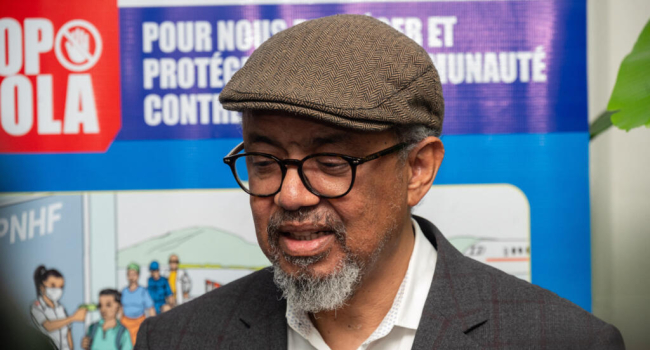
The head of the World Health Organization, Tedros Adhanom Ghebreyesus, arrived in the Democratic Republic of the Congo on Thursday, expressing confidence that the country’s deadly Ebola outbreak can still be brought under control.
Tedros is expected to visit the north-eastern province of Ituri, the center of the outbreak, where health workers continue to battle rising infections amid ongoing violence and mass displacement.
“We can stop this outbreak,” Tedros said after landing in Kinshasa, stressing that international cooperation and rapid response efforts remain critical. He also reiterated that the WHO does not support international travel bans, arguing that such measures are largely ineffective in containing the virus.
According to the WHO, the DRC has recorded 10 confirmed Ebola deaths and 223 suspected fatalities since the outbreak was officially declared on 15 May. More than 1,000 confirmed and suspected cases have been reported so far, though officials believe the real number may be significantly higher because the virus likely circulated undetected for some time.
The current outbreak involves the Bundibugyo strain of Ebola, for which no approved vaccine or treatment currently exists. However, WHO advisory groups have recommended launching clinical trials for potential vaccines and therapies.
Tedros also called for an immediate ceasefire in the conflict-hit region, warning that armed clashes are severely complicating medical operations and humanitarian aid delivery.
“No conflict is worth allowing innocent people to die from a preventable disease,” he said.
The African Union’s health agency said a vaccine candidate could be ready by the end of the year. Meanwhile, neighbouring Uganda announced the closure of its border with the DRC after reporting Ebola-related cases within its territory.
The United States has also introduced entry restrictions for infected individuals and is working on plans to establish a treatment facility for American citizens in Kenya.
Ebola outbreaks have killed more than 15,000 people across Africa over the past five decades. One of the deadliest outbreaks in the DRC between 2018 and 2020 claimed nearly 2,300 lives.