make preferable
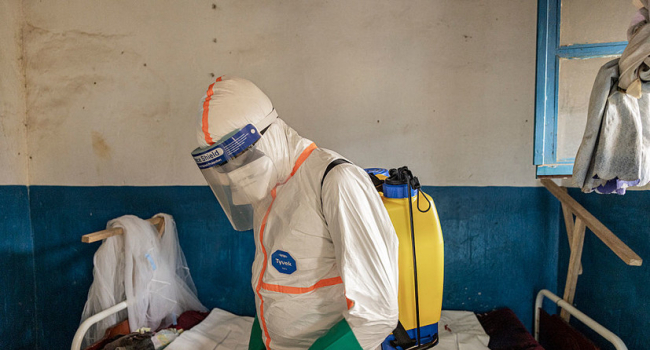
The humanitarian medical organization Médecins Sans Frontières (MSF) has warned that the Ebola outbreak in the Democratic Republic of the Congo is worsening rapidly, describing the situation as “deeply alarming,” according to BBC News.
Just two weeks after the outbreak was declared in Ituri Province, an unusually large number of suspected cases has already been reported. Dr. Alan Gonzalez, deputy director of MSF, said the organization had “never before seen such a rapid rise in cases so soon after an outbreak was declared.”
The escalation comes as Tedros Adhanom Ghebreyesus, Director-General of the World Health Organization (WHO), visits the outbreak’s epicenter in Ituri Province.
According to the latest reports, more than 1,000 suspected infections and at least 246 deaths have been recorded in the country. In neighboring Uganda, authorities have confirmed nine cases and one death.
MSF officials caution that the true scale of the outbreak may be significantly larger, as new suspected cases continue to emerge daily while many laboratory samples remain unprocessed.
Efforts to contain the virus are being hampered by major logistical challenges, including border and airport closures, as well as ongoing armed conflict in parts of the region, which complicates the delivery of medical supplies and humanitarian assistance.
During a visit to the city of Bunia, Tedros Adhanom Ghebreyesus said international teams are assessing the effectiveness of the current response and identifying ways to strengthen support for affected communities.
He urged local residents to play a more active role in outbreak control, noting that community members possess valuable knowledge of local conditions and can help slow the spread of the disease.
Tedros also warned about the risks associated with certain traditional burial practices, particularly direct contact with the bodies of deceased individuals, which can contribute to further transmission of the virus.
Ebola spreads through direct contact with the bodily fluids of infected individuals or contaminated objects. Managing the disease requires strict isolation measures and intensive supportive care.
According to public health authorities, the current outbreak is being driven by the rare Bundibugyo strain of Ebola virus. No approved vaccine currently exists for this strain, and the fatality rate is estimated to be approximately one-third of all infections.