make preferable
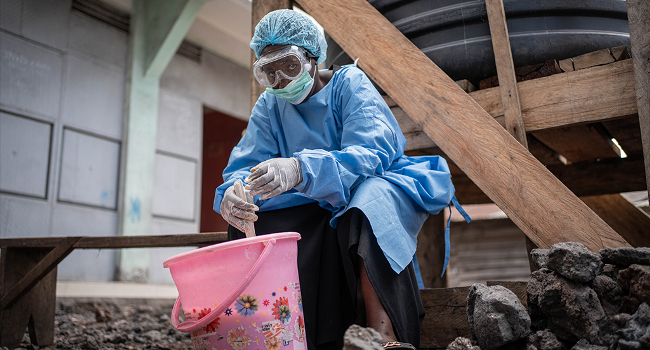
The number of confirmed Ebola cases in the Democratic Republic of the Congo has risen to 282, according to the country's health authorities, as survivors of the outbreak described their recovery as a source of hope amid a rapidly evolving public health crisis.
The outbreak remains concentrated in Ituri Province, where 264 of the confirmed infections have been recorded, the Ministry of Health reported. Overall, the country has documented more than 1,000 suspected cases linked to the rare Bundibugyo strain of the Ebola virus, for which no approved vaccine or specific treatment currently exists.
Health officials say the main challenges in controlling the outbreak include the early detection and isolation of infected individuals, comprehensive contact tracing, safe burial practices, and strengthening infection prevention measures in healthcare facilities.
According to the ministry, only 45% of identified contacts are currently being monitored, while 220 suspected cases remain under investigation.
Amid these challenges, several of the five patients who have recovered from Ebola spoke about their experiences.
One of them, nurse Baraka Bulambulu, said he felt overwhelming joy after receiving two consecutive negative Ebola test results.
“The first test was positive, but the second and third were negative,” he said. “Coming through this illness alive is an indescribable joy.”
Bulambulu was among a group of survivors who received certificates of recovery from Tedros Adhanom Ghebreyesus during the opening of a new Ebola treatment center in the city of Bunia.
Another survivor, nurse Ezo Etienne, recalled that his symptoms began suddenly while conducting hospital rounds.
He said he experienced dizziness and low blood pressure before developing severe vomiting, prompting immediate concern that he might have contracted the virus.
The World Health Organization reports that all five known survivors are healthcare workers—four nurses and one laboratory employee—highlighting the particular risks faced by frontline medical staff during the outbreak.
Current treatment efforts focus primarily on supportive care and symptom management, as no approved therapies specifically target the Bundibugyo strain.
Addressing the recovered healthcare workers, Tedros Adhanom Ghebreyesus praised their resilience.
“Your courage gives hope, and your story shows that this outbreak can be stopped.”
Neighboring Uganda has also reported nine Ebola cases and one death. Authorities have implemented border-control measures in an effort to reduce cross-border transmission.
Although more than 20 Ebola outbreaks have occurred in Congo and Uganda over recent decades, outbreaks caused by the Bundibugyo strain remain uncommon. The absence of approved vaccines, combined with the remoteness of affected communities and ongoing armed conflict in some areas, has complicated response efforts.
Despite these difficulties, Dr. Dieudonne Mwamba Kazadi, head of Congo’s National Institute of Public Health, described the recoveries as an important milestone.
He emphasized that the cases demonstrate that survival is possible when patients seek medical care early and receive treatment in specialized healthcare facilities.