make preferable
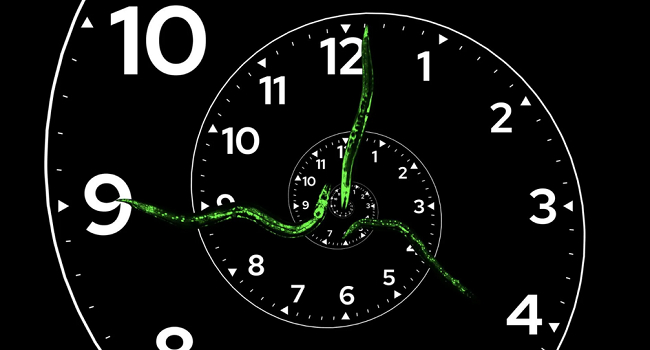
Researchers at Cold Spring Harbor Laboratory have identified a mechanism that can be viewed as a central developmental “clock” in the roundworm C. elegans, according to Science Daily.
The study explains how cells coordinate the highly ordered stages of organismal development, ensuring that transitions from one growth phase to the next occur in the correct sequence and with precise timing.
The same research team had previously shown that C. elegans development is controlled not by continuous gene activation but by successive pulses of gene expression. However, it remained unclear what mechanism sets the exact rhythm of these pulses and prevents disruptions in the process.
The new study found that two proteins, MYRF-1 and LIN-42, play a crucial role. Together, they form a regulatory feedback loop that functions as a biological “timer,” coordinating the initiation and completion of each stage of genetic activity.
According to the authors, this is the first described example of a non-repeating biological clock-like mechanism of this kind. Unlike classical circadian rhythms, which operate in recurring cycles, this system functions as a one-time sequence of events that drives the organism’s progressive development.
MYRF-1 serves as the starting signal for each developmental stage and also participates in checkpoints that confirm its completion. After triggering a new genetic pulse, it activates the LIN-42 protein, which regulates the intensity and duration of gene expression. Together, they ensure the correct developmental sequence and prevent errors during transitions between stages.
Experiments showed that blocking MYRF-1 completely disrupts the developmental program, preventing the organism from progressing through successive growth stages. This highlights the protein’s critical role as a central component of the regulatory system.
The researchers also employed molecular techniques, DNA and protein sequencing, and structural modeling tools, including AlphaFold, to better understand the interactions between the system’s components.
One of the remaining open questions is how individual cellular “clocks” synchronize with one another. Although the MYRF-1/LIN-42 mechanism is present in every cell, it operates in a coordinated manner across the organism, creating a unified developmental rhythm. Scientists do not yet know whether cells actively communicate with each other to maintain this synchronization.
In the future, understanding such systems may help explain the origins of developmental disorders and various genetic diseases associated with disruptions in cell growth and differentiation. The findings also broaden our understanding of how multicellular organisms coordinate complex developmental programs over time.