make preferable
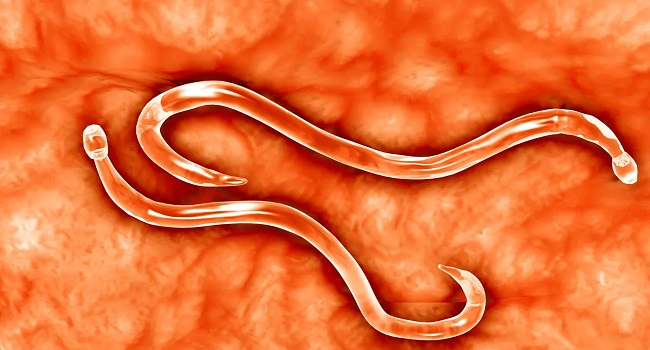
Researchers have used genetic engineering to reprogram a hookworm—a tiny intestinal parasitic worm—to produce antibodies capable of partially neutralizing tetrodotoxin, the potent neurotoxin found in pufferfish. The study was published in the journal Nature Communications.
The team worked with Ancylostoma ceylanicum, a species of hookworm that can infect humans as well as dogs and cats. Using CRISPR gene-editing technology, scientists inserted a gene encoding an antibody against tetrodotoxin into the parasite’s genome at the egg stage. The modification was designed to avoid disrupting the worm’s essential biological functions while enabling it to produce and secrete the therapeutic protein.
To test the concept, researchers infected hamsters with the genetically modified parasites, introducing between 80 and 100 larvae into each animal. As the worms matured inside their hosts, they began producing the engineered antibody and releasing it into the bloodstream. Blood tests showed that the antibodies were able to partially neutralize tetrodotoxin in laboratory experiments.
The central idea behind the research is to turn a parasite into a kind of “internal drug factory.” Hookworms have naturally evolved to survive for long periods within the intestine by secreting molecules that suppress the host’s immune response and help ensure their own survival. Scientists have now adapted this biological strategy by adding the ability to manufacture therapeutic proteins.
According to the authors, the platform could eventually be applied far beyond antidotes. In theory, genetically modified parasites might be engineered to produce molecules for the treatment of chronic diseases, including inflammatory bowel disorders, metabolic conditions, and even type 2 diabetes. Researchers have also discussed the possibility of using such organisms to release compounds that gradually desensitize patients with food allergies.
The concept may seem counterintuitive—deliberately infecting a person with a parasite in order to treat disease.
However, hookworms have a relatively predictable life cycle and only limited capacity for uncontrolled reproduction inside the body. In addition, infections can be rapidly eliminated using standard antiparasitic medications if necessary.
In essence, the approach represents an attempt to create an entirely new method of drug delivery—not through pills or injections, but through a living organism capable of producing therapeutic molecules directly inside the patient's body.