make preferable
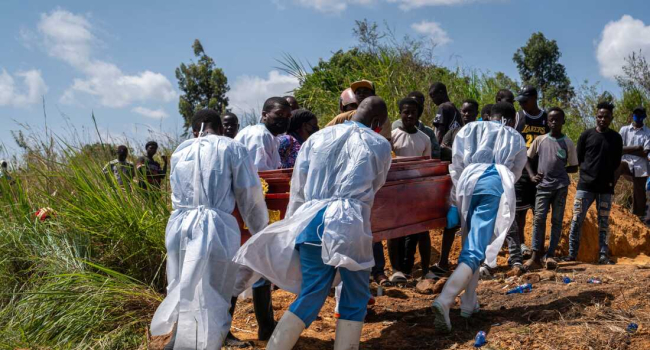
The ongoing Ebola outbreak in the Democratic Republic of Congo has recorded more confirmed infections during its first month than any previous outbreak of the disease, according to the World Health Organization (WHO).
More than 1,000 people have been infected and at least 267 have died since the outbreak was officially declared on May 15. Health experts believe the Bundibugyo strain of the virus had been circulating for several months before it was detected.
Speaking at a briefing in Geneva, WHO official Abdirahman Mahamud said the rapid spread was partly driven by the fact that some of the earliest confirmed cases emerged in densely populated urban areas, including Bunia and the mining town of Mongbwalu. Unlike many previous Ebola outbreaks that began in remote rural communities and were contained relatively quickly, the current outbreak gained momentum in locations with greater population movement and connectivity.
Mahamud warned that response efforts are struggling to keep pace with the outbreak’s growth. However, he also pointed to signs of progress, noting that the number of Ebola treatment beds has increased to more than 500 in the past two weeks and that resistance to health workers appears to be declining.
According to WHO, awareness of Ebola risks is growing among local communities, with increasing numbers of residents seeking information and protective measures.
Health officials are particularly concerned about the spread of the virus in displacement camps across eastern Congo. The International Organization for Migration (IOM) reported that at least 25 Ebola cases and 14 deaths have been confirmed in several camps housing displaced people.
IOM representative Abdoulaye Wone said overcrowding and frequent movement of residents in and out of the camps create conditions that may facilitate transmission. Many camp residents leave daily in search of food, work, and other necessities.
Further concerns emerged from the Kigonze displacement camp, where local aid workers reported the deaths of four children since Monday. Laboratory testing is still underway to determine whether Ebola was responsible.
The current outbreak is one of more than 20 Ebola epidemics recorded in sub-Saharan Africa. The largest outbreak on record occurred in West Africa between 2014 and 2016, claiming more than 11,000 lives across Guinea, Sierra Leone, and Liberia.