
 make preferable
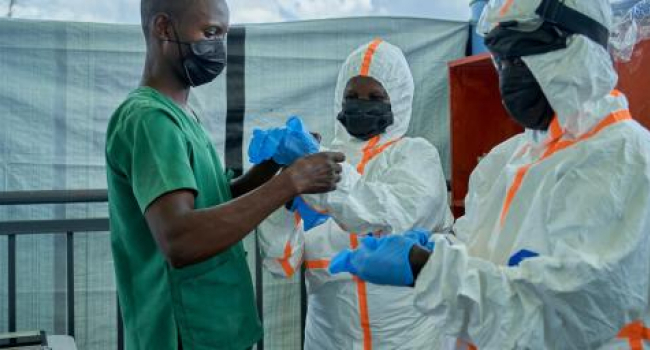
The death toll from the Ebola outbreak in the Democratic Republic of the Congo (DRC) has surpassed 300 just over a month after the epidemic was officially declared, Medical Xpress reports, citing the country's health authorities.
According to the National Institute of Public Health (INSP), 1,115 confirmed Ebola cases and 304 deaths have been recorded since the outbreak was first detected on May 15, resulting in a case fatality rate of 26.3%.
Earlier, on June 18, the Africa Centres for Disease Control and Prevention (Africa CDC) reported 202 deaths among 875 confirmed cases, corresponding to a fatality rate of approximately 23%.
The Red Cross has warned that the hemorrhagic fever outbreak has not yet reached its peak and could take up to a year to be fully contained.
Despite the severity of the situation, authorities in the DRC reported several successful patient recoveries in early June.
Healthcare services are facing significant challenges, as there are currently no approved vaccines or specific treatments for the Bundibugyo strain responsible for the ongoing outbreak. The DRC, one of the world's poorest countries, has experienced 17 Ebola outbreaks to date.
The main epicenter of the outbreak remains in the eastern provinces of Ituri, North Kivu, and South Kivu, where decades of armed conflict and large-scale population displacement have complicated efforts to contain the virus.
Isolated cases have also been reported in neighboring Uganda, where containment measures have proven relatively effective, with 20 confirmed infections and two deaths recorded so far.
Health authorities have also confirmed the first Ebola case outside Africa during the current outbreak after an infected physician from the DRC was transferred to France. The World Health Organization has assessed the risk of the virus spreading across Europe as minimal and does not recommend imposing travel restrictions.
The most severe situation remains in Ituri Province, which accounts for more than 90% of all confirmed cases. The city of Bunia has been particularly hard hit, representing over 91% of infections and more than 82% of deaths.
Medical facilities in the region are struggling with shortages of equipment, personal protective gear, and basic supplies, while many clinics supported by humanitarian organizations are operating at the limits of their capacity.
The response is further complicated by ongoing armed violence and widespread distrust of healthcare workers. Some families refuse to comply with public health measures and insist on retrieving the bodies of deceased relatives, increasing the risk of further transmission.
Follow NEWS.am Medicine on Facebook and Twitter.





