make preferable
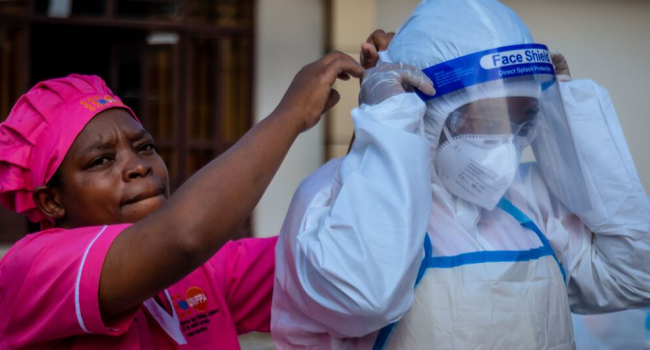
The true number of Ebola infections in the Democratic Republic of the Congo (DRC) may be two to four times higher than officially reported, according to Dr. Chikwe Ihekweazu, Executive Director of the World Health Organization's Health Emergencies Programme.
Official figures indicate that the outbreak has infected around 2,000 people and claimed more than 700 lives. However, WHO estimates based on mathematical modeling suggest that the epidemic may be significantly larger than current surveillance data indicate.
“Based on our mathematical models, we believe the scale of the outbreak is at least two to four times greater than the number of cases that have been identified. At the same time, our ability to detect cases continues to improve, making our estimates increasingly accurate,” Ihekweazu said during a briefing in Geneva.
He explained that approximately 80% of newly detected infections are being identified outside known contact-tracing networks, indicating that many transmission chains remain undetected. In addition, a substantial number of infected individuals die at home without ever reaching medical facilities, meaning their cases are never officially recorded.
According to the WHO, these factors make it difficult to determine the true scale of the outbreak and complicate efforts to contain the spread of the virus.