make preferable
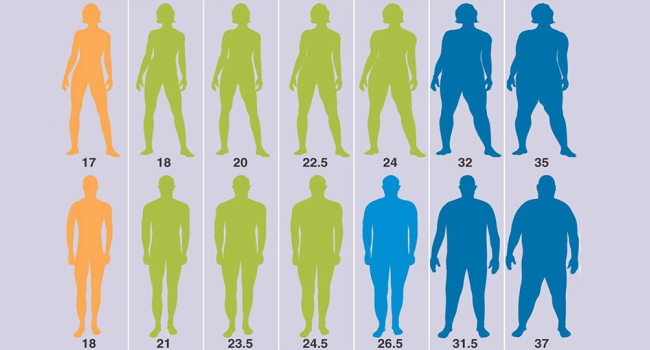
Scientists have developed a new body mass index that may overcome some of the long-recognized shortcomings of the traditional Body Mass Index (BMI). The proposed Consistent Body Mass Index (CBMI) showed a closer relationship with the waist-to-height ratio—a measure increasingly regarded as a better indicator of obesity-related health risks—than existing alternatives. The findings were published in Scientific Reports.
Although BMI has been widely used for decades to assess body weight, researchers note that it has important limitations. It does not accurately account for differences in body proportions, performs poorly in children and people with very short or very tall stature, and cannot distinguish between fat and muscle mass. These shortcomings have prompted scientists to search for more reliable anthropometric measures.
In the new study, researchers designed CBMI as a scalable index intended to provide a more consistent assessment of body size across different ages and body types. Instead of relying solely on weight and height, the new formula was mathematically developed to correspond more closely with the waist-to-height ratio, which has been increasingly linked to the risk of cardiovascular disease, type 2 diabetes, certain cancers, and premature death.
To develop the index, the team created a simplified mathematical model representing the human body as a cylinder, with height corresponding to body stature and circumference reflecting waist size. Although this model does not capture all differences in body shape, sex, ethnicity, or body composition, the researchers considered it a practical framework for evaluating the new index.
The study included 400 healthy participants ranging from infants to adults, recruited at a hospital in Istanbul. Researchers measured body weight, height, and waist circumference and compared the performance of CBMI with the Tri-ponderal Mass Index (TMI), another proposed alternative to BMI.
The results showed that CBMI corresponded more closely with waist-to-height ratio than TMI, suggesting it may provide a more reliable way to classify body size across different age groups.
Based on their findings, the researchers proposed preliminary reference ranges for both waist-to-height ratio and CBMI. They suggest that a waist-to-height ratio of 0.50 should represent the upper limit of the healthy range, while 0.46 may serve as an ideal target. However, the authors stress that these thresholds remain provisional and require confirmation in larger and more diverse populations.
The researchers also suggest that CBMI could eventually help estimate ideal body weight for a person's height. However, they emphasize that the new index has not yet been validated against direct measurements of body fat or long-term health outcomes.
The authors conclude that although CBMI appears promising as a more consistent measure of anthropometric status than conventional BMI, further large-scale studies are needed before it can be adopted in routine clinical practice.