make preferable
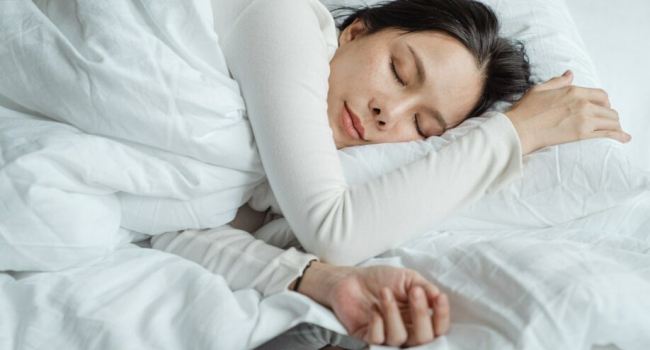
The “eight hours of sleep” rule may not be as universal as commonly believed. A new review of research shows that people living without electric lighting sleep an average of 6.4 to 7.1 hours per night — not necessarily longer than people in industrialized countries, and sometimes even less. The authors suggest that sleep should be assessed not only by its duration, but also by its timing, regularity, and relationship to the natural light-dark cycle.
Published in the journal Brain Medicine, the review combines data from anthropological studies, historical sources, and genetic research. The authors emphasize that this is a review rather than an experiment, so it does not establish cause-and-effect relationships.
The researchers compared sleep data from three contemporary hunter-gatherer societies: the Hadza in Tanzania, the San in Namibia, and the Tsimane in Bolivia. Their sleep patterns are closely linked to the natural cycle of day and night and are characterized by a high degree of regularity. At the same time, the authors found no convincing evidence that these populations typically sleep in two separate periods.
According to the researchers, industrialization has changed sleep primarily not in terms of its duration. People have begun going to bed later, sleeping less regularly, and becoming less synchronized with natural light, while sleep disturbances have become more common. By contrast, the overall number of hours people sleep has changed much less.
Genetic data also argue against the idea of a universal sleep requirement. The researchers examined a rare variant of the DEC2 (BHLHE41) gene associated with naturally short sleep. Members of one family carrying this variant slept for about six hours without showing signs of chronic sleep deprivation.
According to the authors, this suggests that not everyone who regularly sleeps fewer than seven to eight hours should necessarily be considered a patient.
The researchers also focused on orexin, or hypocretin, a neurotransmitter that plays an important role in maintaining wakefulness. Disruptions in the orexin system are associated with narcolepsy in humans, while studies in dogs, mice, and even cavefish demonstrate how ancient the molecular mechanisms regulating sleep and wakefulness may be.
At the same time, the authors stress that the presence of genes associated with sleep regulation in ancient organisms does not mean that these organisms actually slept.
Climate change is another factor. According to projections cited in the review, under high-emission scenarios and without further adaptation, rising temperatures could increase the number of nights with insufficient sleep in the United States between 2050 and 2099.