make preferable
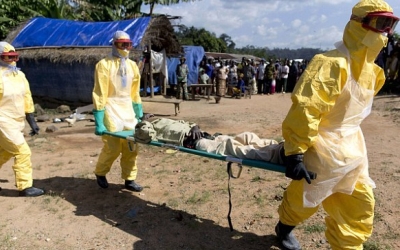
A new diagnostic test for the Ebola virus which produces results in 15 minutes is set to be trialled in Guinea - the epicentre of the current outbreak.
The new test is six times faster than those currently used, and aims to speed up the diagnosis of cases, The Daily Mail reports.
It will be trialled in a treatment centre in Conakry, the West African nation's capital.
Early detection of the virus leads to better infection control as medical staff can identify and isolate confirmed cases of Ebola faster, and start treating patients sooner.
Ultimately it is hoped a faster test will reduce the spread of the highly contagious disease, and slow the spiralling death rates.
The new trial is one of six health research projects that have been jointly funded by the Wellcome Trust and the UK Government's Department for International Development.
Led by researchers at the Pasteur Institute in Dakar, Senegal, the new test will be deployed using a 'mobile suitcase laboratory', which is designed for settings where there are few resources.
The portable lab includes a solar panel, a power pack and a results reader, the size of a small laptop.
The reagent substance used in the test are available as dried pellets, meaning they can be used and transported at room temperature.
Similarly to the tests currently in use, the new diagnostic tool detects the genetic material of the virus.
The pilot trial will test whether the reagent substance is safe and effective to use with Ebola patients' blood and saliva samples.
Dr Val Snewin, international activities manager at the Wellcome Trust, said: 'A reliable, 15-minute test that can confirm cases of Ebola would be a key tool for effective management of the Ebola outbreak - allowing patients to be identified, isolated and cared for as soon as possible.
'It not only gives patients a better chance of survival, but it prevents transmission of the virus to other people.
'This pilot study is particularly promising because researchers have considered how to make the test suitable for use in remote field hospitals, where resources - such as electricity and cold storage - are often in short supply.'
International Development Secretary Justine Greening said: 'Britain's first Ebola laboratory is already up and running in Sierra Leone and two more are currently being constructed.
'Together these will quadruple the number of tests that can be carried out every day and helping contain the spread of Ebola.