make preferable
The Y chromosome is often thought of as defining the male sex. Now scientists find that only two genes on the Y chromosome are needed in mice for them to father offspring.
These findings could point to ways to help otherwise infertile men with a condition called azoospermia have children, the researchers said.
In the study, researchers injected two Y-chromosome genes into mouse embryos that lacked a Y chromosome, and found the embryos grew into adult mice that could produce offspring not through the typical get-together with a female mouse, but through assisted reproduction techniques.
Past research showed that when a gene called Sry was inserted into mouse embryos that are genetically female, it changed the fate of the mice. Even though they had two X chromosomes, they developed into males. These mice developed testicles and produced sperm precursor cells known as spermatogonia; however, these cells did not develop into sperm cells, Fox News reports.
In the new work, the researchers added other Y-chromosome genes, one at a time, into such mice. The trial-and-error process eventually revealed a gene called Eif2s3y helped spermatogonia occasionally develop into spermatids, or immature sperm.
This means that although mice with Sry and Eif2s3y are male and can generate sex cells, they cannot normally have offspring.
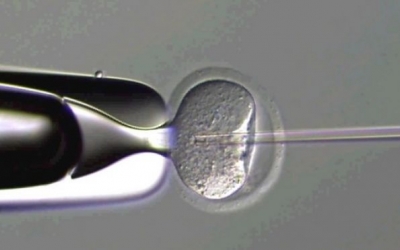
Researchers injected these spermatids directly into egg cells. They found they could successfully fertilize the eggs with this method, resulting in viable offspring. The researchers emphasized the whole Y chromosome is likely needed for normal reproduction its other genes help mature sperm develop.
The researchers noted these findings may not hold up in humans. Still, this work could support it as an option for overcoming infertility in men in the future.