make preferable
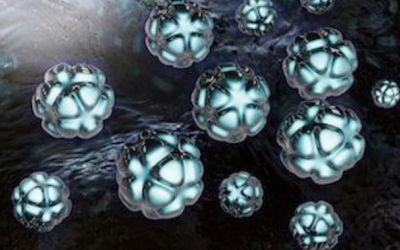
Nanoparticle research is currently described as being the most studied branch of science, Medical News reports. Nanoparticles - tiny objects that behave as a whole unit in terms of their transport and properties - have applications in all kinds of medical fields.
They have been used as delivery systems for drugs and genes, for detecting disease or proteins, in tissue engineering and for destroying tumors, among other things.
Researchers at the University of Illinois at Chicago have now made nanoparticles from tiny pieces of protein that bind to a type of immune cell responsible for acute and chronic inflammatory responses.
These cells - called neutrophils - should normally accumulate at an injury in a damaged blood vessel to prevent bacteria of injured tissue from causing infection. But in chronic inflammation, these neutrophils pile up at the location of the injury, sticking to the walls of the blood vessel and damaging tissue.
These pile-ups can be especially dangerous in lung injuries, where they can lead to severe breathing problems. Up to 50% of patients with this inflammation in the lungs die if it goes untreated.
Prof. Asrar B. Malik, lead author of the new study, explains:
"The nanoparticle is very much like a Trojan horse. It binds to a receptor found only on these activated neutrophils, and the cell automatically engulfs whatever binds there.''
Testing their nanoparticles in mice with induced vascular inflammation, Prof. Malik and his colleagues used a fluorescent dye to track the particles' progress.
They observed that the nanoparticles would bind to and enter the clustering neutrophils but would not bind to any neutrophils circulating freely within the bloodstream.