make preferable
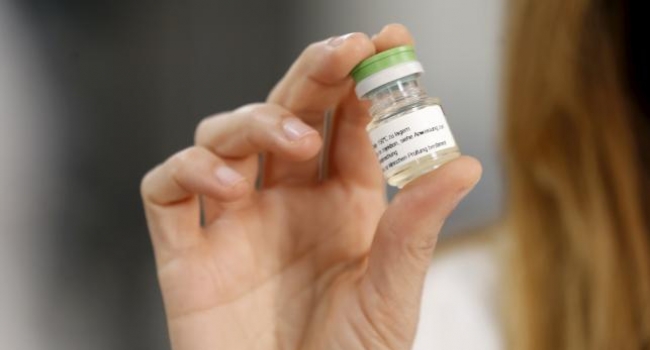
Israeli biotech firm Pluristem Therapeutics said it hopes its anti-radiation therapy will protect Fukushima workers decommissioning nuclear reactors and save lives in the future if ever a similar catastrophe occurs.
The Haifa-based company said they have developed a placenta-based cell therapy injection that can fully cure patients with multiple organ failure caused by high radiation exposure.
Pluristem Therapeutics' Vice President of Medical and Clinical Affairs Dr. Esther Lukasiewicz Hagai said cells grown from placentas donated by women who had undergone a C-section, are harvested to create a cocktail of therapeutic proteins which combat potentially lethal damage to the lungs, skin, bone marrow and gastrointestinal tract caused by radiation exposure.
"We've been investigating the placenta for the last decade and we have discovered that the placenta cells have unique properties that can help the body to recover after exposure to high level of radiation," Lukasiewicz Hagai said.
"We are injecting these cells to the bodies' muscles...that will help the bone marrow to recover after radiation."
The effect of the treatment has been tested on different levels of radiation, including a level of radiation that could cause up to 70 percent mortality rate, Lukasiewicz Hagai said.
In January Pluristem's PLX-R18 therapy was cleared by the U.S. Food and Drug Administration (FDA) for clinical trials in animals.
Clinical trials which have been conducted both in the United States, with the National Institute of Health and at Hadassah-University Medical Center in Jerusalem, have shown a nearly 100 percent recovery rate in animals exposed to radiation.
Yaky Yanay, President and Chief Operations Officer at Pluristem Therapeutics and co-chairman of Israel Advanced Technology Industries (IATI), said clinical trials have so far shown optimal results if the vial is injected within 48 hours of exposure to lethal radiation.
"It will be very easy to use, off-the-shelf and readily available," Yanay said adding that it requires no DNA matches prior to administration into the muscle.