make preferable
In the 40 years that he's been writing books and movie reviews, critic Leonard Maltin has earned a slew of accolades, CBS News reports.
"I save all the reviews my books have gotten over the years. And I can cite the negative ones for you pretty much from memory," he said.
When asked how he takes it when a movie of his is panned, actor Christopher Walken replied, "You know, it's hard."
Kevin Kline said, "They're not writing them for us, and it's stupid for us to read them."
Kathy Ireland recalled, "A critic said I had a voice that could kill small animals.''
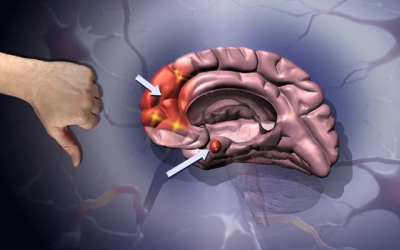
So why are the unpleasant things so unforgettable? The theory is that bad news makes a much bigger impact on our brains, and it's been that way since the caveman days, when our lives depended on being able to remember, above all, what could kill us.
Smith asked Leonard Maltin, "Do you think about people's feelings when you sit down to review something?"
Sometimes, he replied, "because I've been criticized, too. But if I've just seen a really terrible movie that has offended me to the marrow of my bones, I'm not going to be thinking so much about their feelings."
John Simon was a longtime critic for New York magazine.
In 1977, he reviewed Liza Minelli's Broadway show, "The Act," and criticized everything, including her face, writing that she had "blubber lips unable to resist the pull of gravity . . . and a chin trying its damned-est to withdraw into the neck."
Smith asked Simon, "Do you think about people's feelings when you write reviews?"
"Maybe a tiny thought, but not much," he replied. "I feel that a critic cannot afford to worry about how his review will affect an actor or a director or a writer. He has to write what he believes is the truth."
At the University of California San Diego, Dr. Martin Paulus is looking into how negative words affect the brain.
He says that at least two regions of the brain -- the amygdala and the medial prefrontal cortex -- work harder when processing criticism, and can keep the brain from doing much else.
Of course, there is such a thing as pushing back.
Consider the case of actress Sylvia Miles, a two-time Academy Award nominee, the first time for her role in 1969's "Midnight Cowboy."
When critic John Simon reviewed her in a 1973 play, he referred to her as a party girl and gatecrasher.
Not long afterward, Miles spotted Simon at a party, and she happened to be holding a plate of food.
"I look up and he's standing right there," Miles told Smith. "Without further adieu and without even thinking I just dumped it on the top of his head."