make preferable

Increasing levels of a compound called NAD may be the key to reversing the natural decay in muscles associated with aging, says a study from the University of Pennsylvania. Some athletes are already taking supplements to increase synthesis of this compound with hopes of reversing the decay linked with aging of cells' powerhouses called the mitochondria.
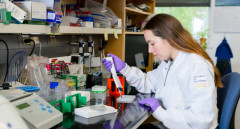
Joseph Baur, Ph.D. and colleagues examined the role of NAD precursor molecules on mitochondria by disrupting the "NAD salvage pathway" in the skeletal muscle of mice.
The NAD pathway consists of a series of enzymes that recycle building block molecules to make fresh NAD to power reactions throughout the cell, and especially within the mitochondria, the cell component that creates energy for the body.
Chemical reactions involving NAD are fundamental to metabolizing all fats and carbohydrate from ingested food, yet NAD degrades in response to such stresses as DNA damage, and its concentration declines over the natural course of aging.
The team created mice in which they could limit the amount of NAD in specific tissues in order to simulate this characteristic of normal aging in otherwise healthy mice.
Surprisingly, young mice were found to tolerate an 85 percent decline in intramuscular NAD content without losing spontaneous activity or treadmill endurance. However, when they hit early adulthood (three to seven months of age), their muscles progressively weakened and their muscle fibers atrophied.