make preferable
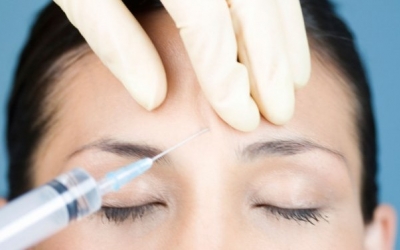
When it was first revealed that women were paying to have a deadly toxin injected into their faces in a vain attempt to hold back the march of time, there were howls of derision from the public, Daily Mail reports.
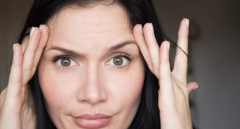
After all, the results of bad ‘work’ – waxen foreheads, permanently startled eyebrows, and smiles that didn’t reach the eyes – were becoming familiar, gleefully spotted on unfortunate celebrities dubbed ‘Botox Zombies’.
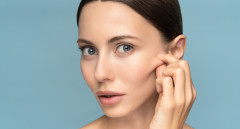
But despite the naysayers, in the right hands, Botox leaves you looking like a more relaxed, more youthful version of yourself.
Jean-Louis Sebagh, whose clinics in Paris and London’s Wimpole Street are packed with the beautiful and the very rich (many fly in to see him the way most of us would pop to the shops), explains: ‘'You have to like your face to come to me – that is the number one rule. You have to want not to change it, just maintain it.’
Many celebrities seek him out. Cindy Crawford is one such person, and Sebagh has helped to maintain her beautifully for the past 20 years.
As our photographs of the 48-year-old show, she doesn’t appear to have aged much in the intervening period, despite having two children and an ongoing career as one of the world’s most in-demand models.
Cindy, who promotes a line of cosmetics with Dr Sebagh, has been refreshingly honest: ‘I’m not going to lie to myself. Past a certain age, creams work on the texture of your skin but, in order to restore elasticity, all I can really count on is vitamin injections, Botox and collagen.’

What discerning cosmetic doctors know, and what their clients appreciate, is that when it comes to Botox, less is more.
‘You shouldn’t be able to notice good Botox,’ says Dr Sam Bunting, who has a practice in Harley Street, Central London. Botulinum toxin has become such a sophisticated treatment that we can reshape brows, widen the eyes and minimise facial asymmetries, while preserving natural movement. I’m definitely micro-dosing when I treat the majority of patients these days..’
Since 2000, Botox and Dysport (another botulinum toxin type A) have been licensed to treat children with cerebral palsy, where the substance is used in much greater quantities than in the face.
Before it was prescribed for cosmetic purposes, Botox was used to ease spasming muscles in the eyes and other parts of the body. Now it’s used to treat a number of different areas, including:
The neck: A tight, stringy neck gives away your age, especially in slim women.
The jaw: ‘The masseter muscle is the biggest in the face,’ says Dr Sach Mohan, of the Revere clinics. ‘Softening that muscle can make the face look less square.’
The armpits: Botox is an approved method of treating excessive sweating.
Botox is also approved by the US Food and Drug Administration for use in the relief of chronic migraine.
Ptosis, or drooping, is the major potential complication after the procedure. This can occur if too much toxin is used.
As with any injectable procedure, there may be localised pain, swelling and bruising at the injection sites. Pain and swelling will last only a few hours, while bruising may take ten days to clear.
Botox is licensed for cosmetic use in the glabellar lines – the vertical lines between the eyebrows – and crow’s feet wrinkles around the eyes.
‘We are seeing a growing trend for teenagers and women in their 20s requesting Botox and I believe it unwise to treat the very young. It is unnecessary and can end up having a very negative effect by encouraging obsession with appearance. I am wary of treating anyone in their 20s unless they have very definite frown line,’ says Dr Tracy Mountford, one of the founders of the British College of Aesthetic Med.