make preferable
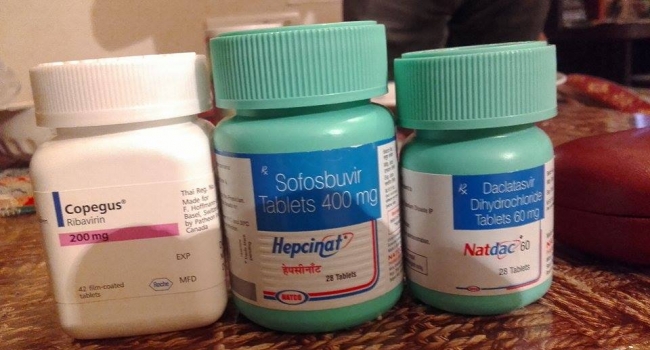
The revolution in generic drugs means that a 12-week course of drugs to cure hepatitis C can be manufactured for just US$50 - as low as the cost of a plane ticket on many low-cost airlines. Furthermore, new data shows that these generic copies are just as effective as the branded medicines. Yet restrictions and patent issues around the world mean that hardly any patients can access the drugs at these low costs, say experts speaking at the World Hepatitis Summit in Sao Paulo, Brazil.
"As there are around 70 million people infected with hepatitis C worldwide, the basic cost of the drugs to treat everyone infected globally, at $50 each, would be around US $3.5 billion," explains Dr Andrew Hill, a pharmacology expert from the University of Liverpool, UK. This represents less than a fraction of 1% of the global health budget of some US$ 8 trillion. "Much more must be done to enable all countries -- but especially developing countries -- to produce or buy drugs for these lower prices. Without significant changes to pricing structures, the battle against the global hepatitis C epidemic simply can't be won."
In his presentation, Dr Hill will present data on the hugely varying cost of a 12-week course of sofosbuvir and daclatasvir, a common combination of the new directly acting antiviral drugs (DAAs) that have revolutionised hepatitis C treatment by providing rapid cure with few or no side effects. The list price for this combination of drugs ranges from close to cost price in India ($78) and Egypt ($174) to $6,000 in Australia, $77,000 in the UK, and a staggering $96,404 the USA. Yet the basic cost of the active ingredients, including formulation and packaging costs and even allowing a small profit margin for the generic companies brings the basic cost down to under $50 per course.
An analysis presented at the summit on the efficacy of generic DAAs looked at 1160 patients who have imported DAAs for personal use into 88 countries on 5 continents. Data from these patients show that cure rates are well over 90%, the same as for the branded products, but at a fraction of the cost.
"In 2016, for every person cured of hepatitis C globally (1.76 million), another person was newly infected (1.5 million). We simply cannot eliminate this epidemic unless we treat more people. And we can only do this if the prices of the drugs come down," explains Dr Hill.