make preferable
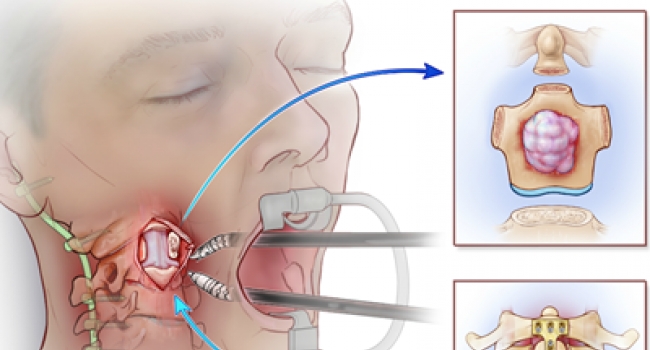
A multidisciplinary team of surgeons led by an Indian-origin professor from the University of Pennsylvania School of Medicine performed the first-ever robot-assisted spinal surgery to successfully remove a rare tumour from the neck of a patient. The groundbreaking surgery was completed at the Hospital of the University of Pennsylvania in August 2017 over a span of two days and more than 20 hours.
Surgeons perform first-in-world robot-assisted spinal surgery Representational image |Photo Credit: Thinkstock New Delhi: Making a remarkable progress in the field of medicine, a multidisciplinary team of surgeons led by an Indian-origin professor from the University of Pennsylvania School of Medicine performed the first-ever robot-assisted spinal surgery to successfully remove a rare tumour from the neck of a patient. The groundbreaking surgery was completed at the Hospital of the University of Pennsylvania in August 2017 over a span of two days and more than 20 hours.The complex three-part, robotic-assisted procedure was applied to remove a rare chordoma tumour from a patients' neck, where the skull meets the spine. Chordoma is a rare type of cancer that occurs in the bones of the skull base and spine. A chordoma tumour usually grows slowly and is often asymptomatic for years. It is extremely rare and it affects only one in a million people each year. In the case of this patient, 27-year-old Noah Pernikoff, a 2016 car accident revealed his surprising diagnosis.
“This would be a first ever use of a robot in this manner - a rare approach to an already rare and complex case,” Neil Malhotra, an assistant professor of Neurosurgery and Orthopaedic Surgery said in a statement. “Our team needed to reconstruct the removed area of patient's spine using bone and rods, and that was only the beginning,” Malhotra added.Talking about the risks associated with the procedure, Malhotra said removal could compromise the structural integrity of his spine, causing permanent paralysis. There was also a risk of complications such as bone and tissue breakdown, loss of sense of smell, fine motor skill issues, and complete paralysis.“ If we couldn’t remove the entire tumour, it would likely grow back, perhaps more aggressive than before,” he added.The surgery was performed in three parts and now nine months after the surgery, the patient is back to work in commercial contracting. The patient also added that he’s forever grateful for the car accident that revealed his diagnosis and the life-saving care that he received at Penn Medicine.