make preferable
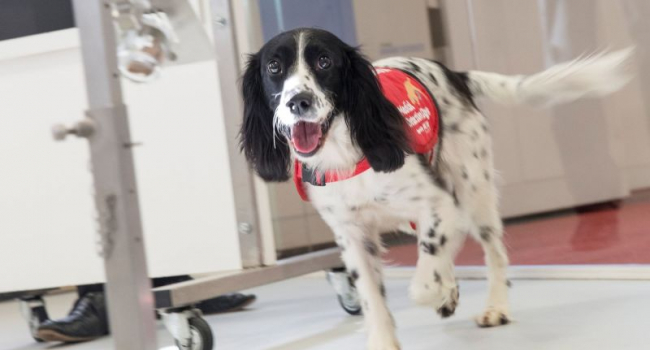
Dogs could be trained to detect malaria by sniffing used socks, research suggests.
Scientists found trained sniffer dogs were up to 70 per cent accurate in detecting the deadly disease.
The Durham University researchers hope the non-invasive test could be used to quickly diagnose and treat patients.
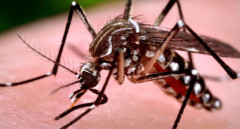
Figures show there were around 216 million cases of malaria - spread by parasites through mosquito bites - in 2016 alone.
Popstar Cheryl Cole is one of the most famous people to have caught malaria, after being struck down on holiday in Tanzania in 2010.
The researchers collected 175 'foot odour samples' from nylon socks worn by children aged between five and 14 from the Upper River Region of The Gambia.
A simple finger-prick test was also carried out on the youngsters to determine if they had the malaria parasite Plasmodium falciparum in their blood.
The sock samples were then transported to the Medical Detection Dogs (MDD) charity in Milton Keynes.
While there, two dogs - a Labrador-Golden Retriever cross called Lexi and a Labrador named Sally - were trained to distinguish between the scent of children infected with malaria and those without the parasite.
Blood tests revealed 30 of the children had malaria, while the remaining 145 were not infected.
The dogs correctly identified 70 per cent of the malaria-infected samples, as well as 90 per cent of those without the parasite.
The research is being presented at the American Society of Tropical Medicine and Hygiene Annual Meeting in New Orleans.
Although in its early stages, the scientists hope the sniffer dogs will be used to help diagnose and treat malaria sufferers earlier.
The animals could also prevent the disease spreading between countries, they add.
'While our findings are at an early stage, in principle we have shown that dogs could be trained to detect malaria infected people by their odour with a credible degree of accuracy,' lead author Professor Steve Lindsay said.
'This could provide a non-invasive way of screening for the disease at ports of entry in a similar way to how sniffer dogs are routinely used to detect fruit and vegetables or drugs at airports.
'This could help prevent the spread of malaria to countries that have been declared malaria-free.
'And also ensure that people, many of whom might be unaware that they are infected with the malaria parasite, receive antimalarial drug treatment for the disease.'
The sniffer-dog test may be particularly useful in countries that have the malaria parasite, but the number of sufferers are low, the scientists add.
Confirmation of the disease would then be made by taking a finger-prick blood sample.