
 make preferable
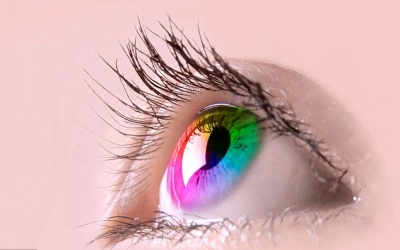
The eyes are the window to your soul. The curious links between eye colour and health have fascinated scientists for years, leading to a body of research that suggests the colour affects how much you feel pain, how quick your mind is - and even how well you can handle your drink.
Inna Belfer, a professor of anaesthesiology at Pittsburgh University, says the study of 58 pregnant women found those with light-coloured eyes seemed to experience less pain while giving birth. Furthermore, the women with lighter eyes suffered less anxiety after the birth, lower rates of depression and fewer negative thoughts, told Professor Belfer
Until recently, it was thought there was one form of a gene for blue eyes and another one for darker eyes.'But that is absolutely rubbish,' says Dr Jari Louhelainen, a senior lecturer in biomolecular sciences at Liverpool John Moores University. 'What we know now is that eye colour is based on 12 to 13 individual variations in people's genes. 'These genes do other things in the body,' says Dr Louhelainen. 'One of them, NCX-4, which is linked to darker eyes, controls many proteins, of which one has recently been linked to pain. Other genes that are linked to melanin, the pigment that makes eyes darker, have also been connected to pain.’
Melanin may also make brown-eyed people more susceptible to alcohol. When psychologists at Georgia State University in Atlanta surveyed more than 12,000 men and women, they found those with light eyes consumed significantly more alcohol than those with dark eyes. The reason brown-eyed people may drink less - and also be less likely to be alcoholics - is because they need less alcohol to become intoxicated.
Melanin not only determines eye darkness, it's also an insulator for the electrical connections between brain cells. The more melanin in the brain, the more efficiently, sensitively and faster the brain can work. It appears blue-eyed people's slower reactions may mean they think in a more considered, strategic way. In tests at the University of Louisville, blue-eyed students proved more successful in activities requiring them to plan and structure their time and studying for exams.
The lack of melanin also made people's skin lighter, and fair skin is better at making vitamin D, vital in northern climes as there is less sunlight, which the body needs to produce the vitamin.





