make preferable
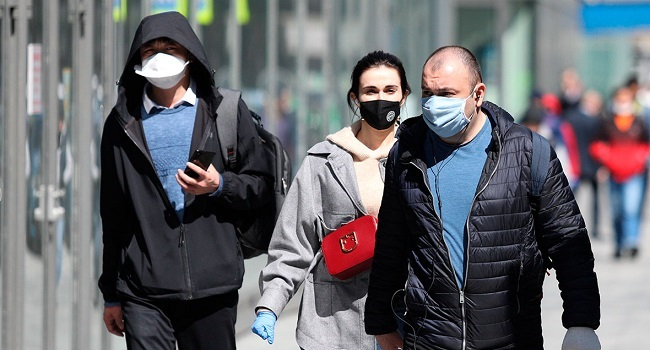
Researchers at McMaster University in Canada studying the dynamics of infectious disease transmission have analyzed the implications of a potentially significant and subtle benefit of wearing masks at the population level, writes News Medical Life Science.
As part of their study, the scientists developed a model to study COVID-19 variolation, a random but potentially beneficial form of immunization achieved by inhaling smaller doses of the virus than by inhaling without a mask.
A form of variolation was deliberately used in the 18th century to control smallpox. It consisted of infecting a healthy person with small doses of a live virus taken from the dried scab or pustule of a person infected with smallpox. People infected with variolation often became much less ill than those who were naturally infected, but nevertheless developed immunity to further infection.
Early in the COVID-19 pandemic, it was suggested that people who become infected while wearing a mask may experience mild illness and be considered "variolated".
The new mathematical model allows researchers to assess the potential impact of this effect on the general population.
The results of this study are potentially applicable to any respiratory infection that is transmitted by inhalation of infectious particles. In the event of the emergence of new variants of COVID or other infectious diseases, the model can be used to study how an increase in the proportion of mild cases affects the overall dynamics of the spread of the disease.